In brief
Following its Oscar win, the BBC documentary 'Mr Nobody Against Putin' has been banned in Russia for purportedly propagating extremism. The film documents the indoctrination of students in the context of the Ukraine war, using footage from a school coordinator who fled Russia. The court's decision reflects the Kremlin's ongoing repression of dissenting media and opposition voices amidst escalating tensions.
A court in Russia has banned the documentary Mr Nobody Against Putin from three streaming platforms on the grounds that it propagates extremism and terrorism.
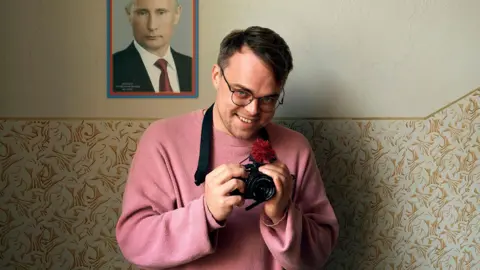
The BBC documentary, which won an Oscar earlier this month, documents the ramping up of war propaganda in a Russian school following Russia's invasion of Ukraine in February 2022.
It is based on footage collected by Pavel Talankin, a school events coordinator who later fled Russia.
Prosecutors argued that the documentary expressed a negative attitude towards the [war in Ukraine] and the current government, according to Russian media.
The deputy prosecutor also claimed the film featured the flag of a terrorist organisation, referring to the white-blue-white flag used by anti-war protesters.
The ruling was issued by a court in the city of Chelyabinsk, not far from the town of Karabash, where Talankin's school is located. It mandates the removal of the film from three online video platforms.
Earlier in March, a Russian governmental human rights body condemned the documentary for using footage of children collected without their parents' consent and announced intentions to appeal to the Oscars Academy for an investigation.
Mr Nobody Against Putin charts the Kremlin-mandated indoctrination of Russian schoolchildren, including lectures on the need to denazify Ukraine, speeches by war veterans, and lessons on how to detect landmines and handle weapons.
The documentary also features stories of Talankin's former students who joined the military and were killed in Ukraine, alongside his own acts of resistance. In his Oscars acceptance speech, Talankin remarked, For four years we have looked at the sky for shooting stars to make a very important wish... But there are countries where, instead of shooting stars, bombs fall from the sky and drones fly. For the sake of our future, and for the sake of all our children, let's end all wars.
Since Russia's full-scale invasion of Ukraine, the Kremlin has intensified its crackdown on opposing viewpoints, with severe penalties for public dissent. The documentary, a Danish-Czech production, also won the Bafta award for Best Documentary earlier in 2026.
The Kremlin has avoided addressing the documentary after its Oscar victory. Dmitry Peskov, Vladimir Putin's spokesperson, stated, I did not watch this film. During a cultural council meeting, Putin criticized Russian cinemas for showing stupid and unnecessary foreign films while not providing enough support to national producers.