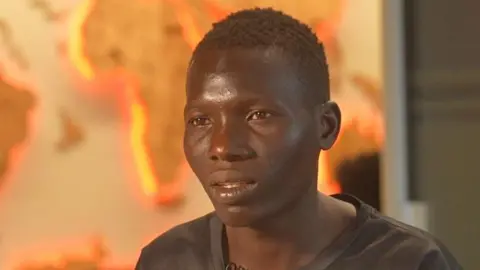
Not listening to his mother cost 23-year-old Nigerian Rasheed Wasiu dearly – more than five years of his freedom for something he did not do.
Now released from prison, where he was stuck waiting for his trial as the judicial process crawled on, Rasheed has no idea where she is. His mother has gone missing.
In October 2020, she had told him not to go out as widespread anti-police brutality demonstrations, known as the End Sars protests, swept into his area of Lagos, Nigeria's bustling commercial heart.
People's anger was directed towards the now-disbanded Special Anti-Robbery Squad (Sars), accused of robbing, attacking and even killing innocent people.
The reaction of the security forces to the 2020 demonstrations reached a crescendo on the evening of 20 October, when officers opened fire on a group of protesters in the city.
But the protests had been building over the previous fortnight, with some turning violent, and the police along with a local vigilante group began responding by rounding up anyone they thought might be involved.
On the morning of 20 October, Rasheed, then 17, was trying to get to a painting job with a friend but turned back upon learning of the violence. When he arrived home and disobeyed his mother’s warning to stay indoors, he was caught by the vigilante group and arrested.
Despite being innocent, Rasheed was taken to an army barracks and later moved to Lagos's Kirikiri Correctional Centre, where he waited in vain for his trial.
Stripped of his freedom, he endured harsh conditions and separation from his family, as he was charged with 'unlawful possession of firearms' despite no evidence supporting such allegations.
Months turned into years as his case experienced significant delays, exacerbated by the deterioration of legal support, including the death of one of his lawyers.
Finally, a judge dismissed his case due to insufficient evidence, leading to his release, facilitated by the advocacy group Take It Back Movement.
However, upon returning home, Rasheed found that his mother, who had been deeply affected by his incarceration, was missing and possibly in hiding to avoid threats from the authorities.
As Rasheed struggles to reclaim his life, he is determined to find his mother, recover from the trauma of wrongful imprisonment, and build a future away from dependency on others.