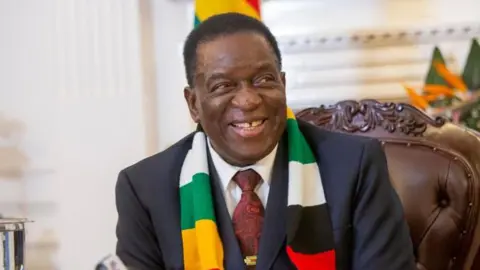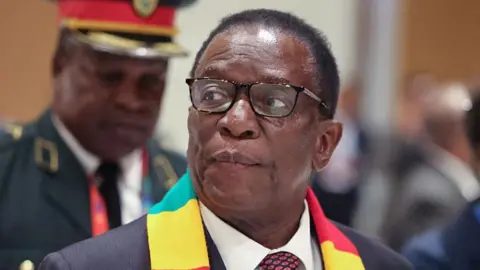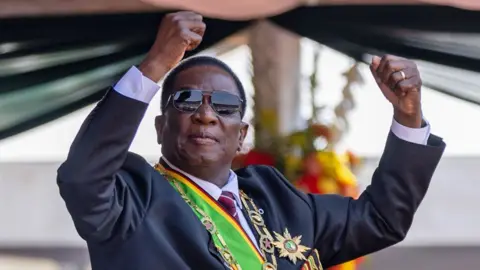
Zimbabwe's cabinet has approved draft legislation that would allow President Emmerson Mnangagwa, 83, to extend his stay in office until at least 2030.
Presidents would be chosen by MPs rather than in a direct vote and could serve a maximum of two seven-year terms, rather than the current five-year terms, under the proposals.
Justice Minister Ziyambi Ziyambi stated that public consultations are planned before the bill heads to parliament for debate, where both chambers are dominated by the ruling Zanu-PF party.
Legal challenges are likely as constitutional experts argue a referendum is needed if term limits are changed, and emphasize that such amendments cannot benefit a sitting president.
Mnangagwa, who first came to power in 2017 following a military coup to oust long-time leader Robert Mugabe, was re-elected in a disputed 2023 presidential election. His final five-year term is set to expire in 2028.
The push for these changes seems to align with growing support within his party for a continued leadership under the guise of completing the 'Agenda 2030' development programme.
Hints that Mnangagwa, once Mugabe's deputy, wanted to extend his rule started two years ago with slogans like '2030 he will still be the leader' echoing at Zanu-PF rallies. Despite facing fierce detractors in Zanu-PF, he has managed to maintain his position, especially after the recent death of his main critic, Blessed Geza, who had publicly denounced Mnangagwa's ambitions.
The government's rationale for the proposed law rests on the belief that it will strengthen governance and promote political stability in Zimbabwe amidst ongoing challenges.