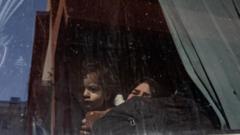
The Rafah border crossing, a crucial lifeline for Gaza, has reopened its gates after eight months of closure, specifically to facilitate the medical evacuation of sick and wounded Palestinians seeking treatment in Egypt. The Hamas-run health ministry reported that fifty patients, including children suffering from cancer, crossed into Egypt to access urgently needed healthcare.
Closed since May of the previous year due to Israeli military control on the Gaza side, the crossing's reopening comes as a part of an ongoing ceasefire and hostage negotiation between Hamas and Israel. Footage capturing the heart-wrenching evacuations depicts young patients, some on stretchers and in ambulances, as they enter the border crossing.
Among the evacuees, Mai Khader Abdul Ghani expressed immense relief as her son, Moatasem Billah Rami Nabil Sammour, was finally granted access to treatment for a rare autoimmune disease that has left him in severe pain. “Thank God that his name was included in the referral for treatment,” she stated to BBC Arabic's Gaza Today. The family had faced significant challenges due to medicine shortages and inadequate healthcare stemming from long-standing border closures.
Another poignant account came from Mohammed Abu Jalala, who was accompanying his niece, Lara Abu Jalala, a bombing survivor that suffered severe foot injuries requiring amputation. “We tried to avoid the amputation, but it had to be performed as the foot had gangrene in the bone,” he recalled.
Dr. Rik Peeperkorn, the World Health Organization (WHO)'s representative for the region, observed that the evacuation process was methodical, taking care to prioritize non-walking patients first. He estimated that around 14,000 individuals in Gaza need medical care that remains inaccessible, with half of those injuries resulting from the ongoing conflict, including trauma-related injuries.
The European Union's foreign policy chief, Kaja Kallas, announced the bloc's deployment of a monitoring mission at the crossing, aiming to assist Palestinian border personnel during the transfer of individuals who require medical care.
As the war between Israel and Hamas escalates, the haunting statistics continue to emerge; over 47,000 Palestinians have reportedly died in the Israeli military's offensive, which was initiated following a Hamas attack on October 7, resulting in significant casualties and hostage situations. The reopening of Rafah also coincides with the fourth hostages’ release and prisoner swap since the ceasefire on January 19, as international efforts begin to address the overwhelming humanitarian ramifications of prolonged conflict in the region.