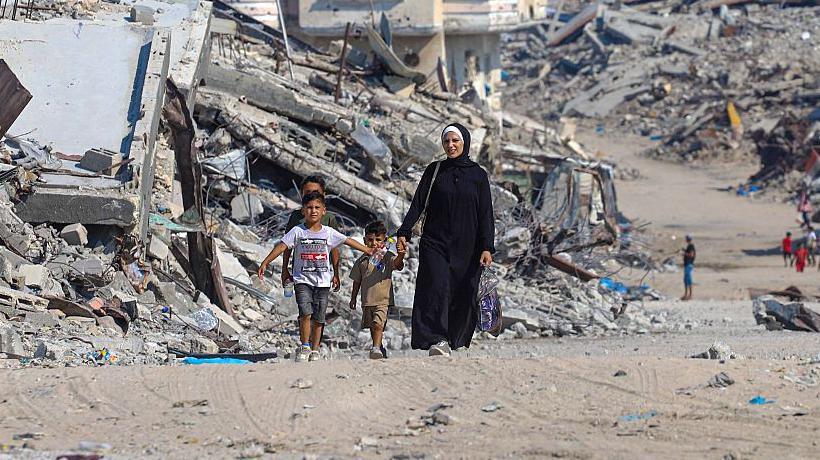
Two Gazan women who passed through the newly reopened Rafah crossing with Egypt on Monday have told the BBC that a local Palestinian militia linked to Israel carried out checks at an Israeli military checkpoint inside the Gaza Strip.
Lamia Rabia, who was travelling with her children, said they were escorted by Israeli forces from the border to a nearby checkpoint where members of the Abu Shabab militia, also known as the Popular Forces, searched them and their belongings.
There was a woman from the Abu Shabab group who conducted the searches on the women, she told the BBC. They didn't speak with us, they only searched us and then we went to the Israelis, who questioned us.
The Israelis and the Abu Shabab group were together at the same point, she explained, emphasizing the collaborative nature of the checks.
The BBC inquired about these claims to the Israel Defense Forces (IDF); however, they were unable to comment. Israel's Shin Bet internal security agency has also been approached for comment, but no response has been received.
The Abu Shabab militia is known for its opposition to Hamas and operates in the Rafah area under Israeli military control. The militia leader has claimed that his group will play an important security role at the Rafah crossing.
One woman reported that the militia promised to assist her in traveling to Europe if she cooperated, while another described mistreatment during her checks, including accusations of being beaten and verbally abused.
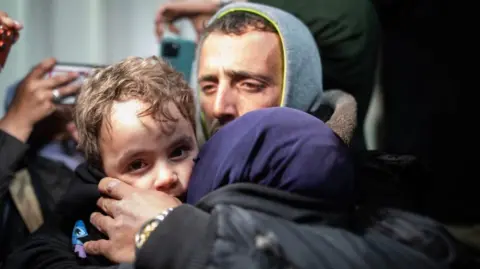
Upon the reopening of Rafah, only 12 Palestinians were allowed to return to Gaza despite expectations for a larger number, highlighting the ongoing complexities at the crossing and the coordination issues between various factions, including local and international entities.
EU monitors reportedly plan to assist new arrivals amidst concerns of mistreatment and confiscation of belongings. The situation raises questions about the management of the crossing and the intricate balance of power in Gaza as humanitarian needs rise and political tensions persist.
Lamia Rabia, who was travelling with her children, said they were escorted by Israeli forces from the border to a nearby checkpoint where members of the Abu Shabab militia, also known as the Popular Forces, searched them and their belongings.
There was a woman from the Abu Shabab group who conducted the searches on the women, she told the BBC. They didn't speak with us, they only searched us and then we went to the Israelis, who questioned us.
The Israelis and the Abu Shabab group were together at the same point, she explained, emphasizing the collaborative nature of the checks.
The BBC inquired about these claims to the Israel Defense Forces (IDF); however, they were unable to comment. Israel's Shin Bet internal security agency has also been approached for comment, but no response has been received.
The Abu Shabab militia is known for its opposition to Hamas and operates in the Rafah area under Israeli military control. The militia leader has claimed that his group will play an important security role at the Rafah crossing.
One woman reported that the militia promised to assist her in traveling to Europe if she cooperated, while another described mistreatment during her checks, including accusations of being beaten and verbally abused.
Upon the reopening of Rafah, only 12 Palestinians were allowed to return to Gaza despite expectations for a larger number, highlighting the ongoing complexities at the crossing and the coordination issues between various factions, including local and international entities.
EU monitors reportedly plan to assist new arrivals amidst concerns of mistreatment and confiscation of belongings. The situation raises questions about the management of the crossing and the intricate balance of power in Gaza as humanitarian needs rise and political tensions persist.