In brief
Through the lens of a powerful narrative, the film seeks to challenge cultural norms and inspire action against the practice.
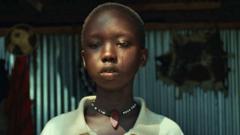
In a significant move toward raising awareness about child marriage, the newly released film "Nawi" has begun sparking crucial conversations in Turkana, a region of north-western Kenya. The film centers around the story of Nawi, a 13-year-old girl portrayed by 15-year-old actress Michelle Lemuya Ikeny, who is forced into marriage with an older man. Despite potential backlash from her local community, Michelle is passionate about her role, using it to highlight a pressing social issue that remains shrouded in silence."Child marriage is a reality for many girls in Turkana, and I want this film to create an opportunity for dialogue," Michelle stated. The United Nations has reported that one in four girls in this region marry before the age of 18, leading to tremendous loss of opportunity and education. Unfortunately, many of Michelle's peers have faced a similar fate; she recounted how friends have been forced to leave school as dowries are paid to marry them off."Nawi" features a gripping plot where the protagonist, after achieving top exam grades, learns that her father intends to sell her into marriage for livestock. In a bold move, Nawi fakes her wedding night, leading to her escape to pursue education in Nairobi, showcasing the struggle against patriarchal traditions.The film's writer, Milcah Cherotich, was inspired by her own childhood experiences in Turkana, where she saw firsthand the life-altering impact of forced marriages. Her narrative not only resonates personally but also addresses the legal contradictions: while Kenya's laws prohibit child marriage, it remains widely practiced. Although the film has faced criticism, especially from traditionalists, it has also contributed to changing perspectives. For example, Cherotich recounted how her uncle, a supporter of child marriage, was visibly moved during a screening. "Storytelling holds the key to shifting mindsets," she emphasized.As part of a broader initiative under the UN's sustainable development goals, filmmakers and advocates aim to expedite the movement towards eliminating child marriage by 2030. While there has been a decrease globally, the challenge remains daunting, particularly in West and Central Africa, where progress has stagnated.Directors of "Nawi," including Toby Schmutzler, remain hopeful for the film's international release, aiming to amplify its message. It screened at the UN headquarters in New York and is being promoted across various platforms to ensure its message reaches a wider audience.To support local communities further, the film's team has initiated free screenings and educational projects, including a newly established school for girls in Turkana. This school, which has already enrolled 300 students, also addresses nutritional needs in drought-affected areas.Michelle Lemuya Ikeny believes in the transformative potential of the film. "Seeing Nawi's journey can resonate with many, especially the 640 million girls affected globally by these circumstances,” she said. "Their dreams can be taken away, and it’s heartbreaking to witness."As discussions surrounding child marriage continue to grow, "Nawi" serves as a beacon of hope and awareness, promoting a future where girls are empowered to pursue their dreams free from the shadows of enforced marriages.