Myanmar's Election: A Fragile Facade Amidst Fear and Intimidation
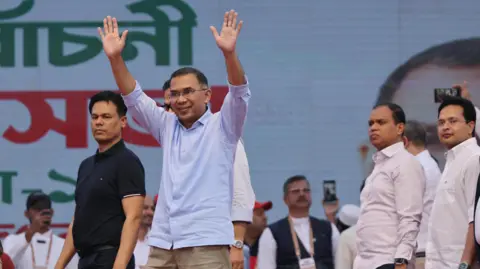
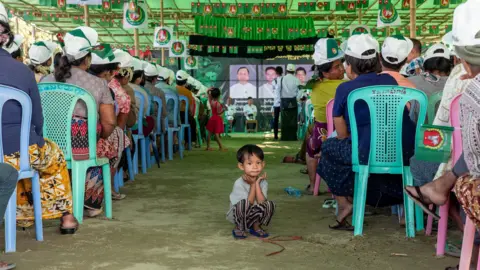
On a rough patch near the Irrawaddy River, Lieutenant-General Tayza Kyaw, a candidate for the Union Solidarity and Development Party (USDP), struggles to engage a weary crowd at a campaign rally in Mandalay. The audience, burdened by an ongoing civil war and the aftermath of an earthquake, seems disinterested, with many dozing off despite clutching party paraphernalia.
As Myanmar approaches its first chance to vote since the military seized power in a coup nearly five years ago, this pivotal moment is tarnished by accusations of illegitimacy. The ruling junta has dissolved the National League for Democracy, the country’s most popular party, and its leader, Aung San Suu Kyi, remains imprisoned.
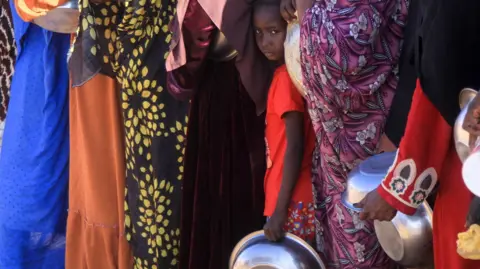
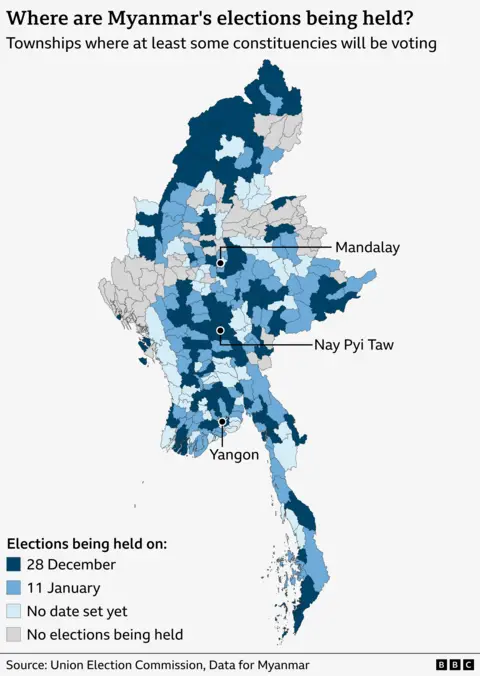
Voting is set for multiple stages, but significant parts of the country remain locked in conflict, rendering genuine electoral participation impractical. Amid threats and intimidation, many citizens are questioning whether to vote at all.
A 'Sham' Election
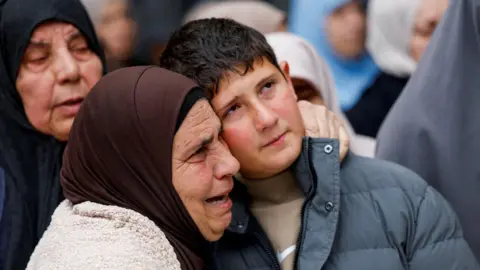
Sunday marks the first opportunity for the people of Myanmar to vote since the military coup commenced a devastating civil war. Despite this, the election has been labeled a sham as the overwhelming majority of the populace has not had their voices represented in years. Many are navigating an atmosphere permeated with fear, raised by threats of retribution from military authorities.
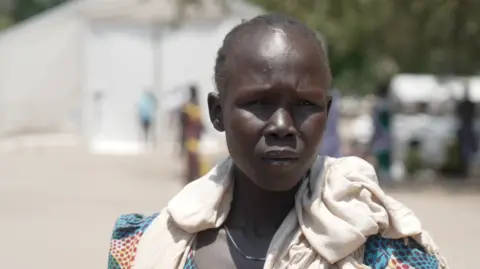
At various rally locations, attempts to understand public sentiment toward the elections have led to reticence among attendees. Citizens express support for the military in front of officials, fearing repercussions if they voice dissenting opinions. One woman’s words capture the mood succinctly: This election is a lie. Everyone is afraid. Everyone has lost their humanity and their freedom.
Since the coup, strict laws criminalizing dissent have fostered a chilling effect on free expression. Journalists face harassment, and those promoting a vote boycott are actively prosecuted.
A General’s Gambit
Contrary to the grim realities citizens experience, Junta leader Min Aung Hlaing appears buoyant, expressing confidence that this orchestrated election might confer legitimacy to his regime. Yet, with more than half the country in dire conflict, the proposed democratic veneer seems more an illusion than a genuine effort toward democracy.
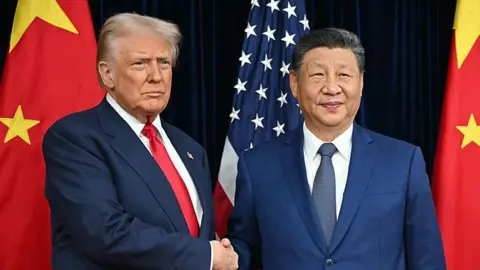
Despite external influences and support from countries like China, whom the junta seeks favor from, many believe the military has only masked the fractures across the nation. Areas under their control show no signs of compromise, leading to a backdrop where any semblance of a free vote remains starkly unrealistic.
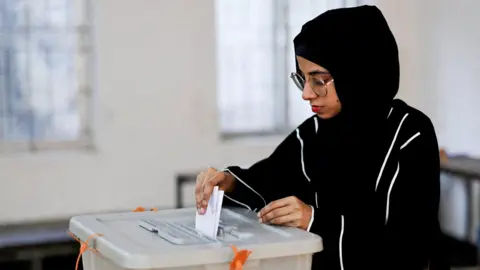
Across the nation, citizens express a grim sense of duty to participate in the elections while voicing an unsettling detachment from the process. We will vote, but not with our hearts, one woman remarked, reflecting the torment and dread overshadowing what should be a celebration of democratic opportunity.