In brief
A 32‑year‑old Colombian woman survived more than a day beneath collapsed rubble after a deadly 7.4‑magnitude earthquake. Local firefighters, aided by national police, carved two tunnels to reach her, providing oxygen and freeing her. The event underlines how community‑driven emergency responses can save lives even in the worst‑hit areas. Authorities are calling for stronger, climate‑resilient infrastructure to reduce future disaster losses. The story also highlights the urgent need for preparedness and coordinated action in regions of high seismic risk.
In the early hours of 12 August, a 7.4‑magnitude earthquake rattled western Colombia, causing widespread collapse in cities like Pereira and Cali. Among the survivors, a 32‑year‑old woman was found alive 36 hours after the tremor, illustrating the power of coordinated community rescue efforts.
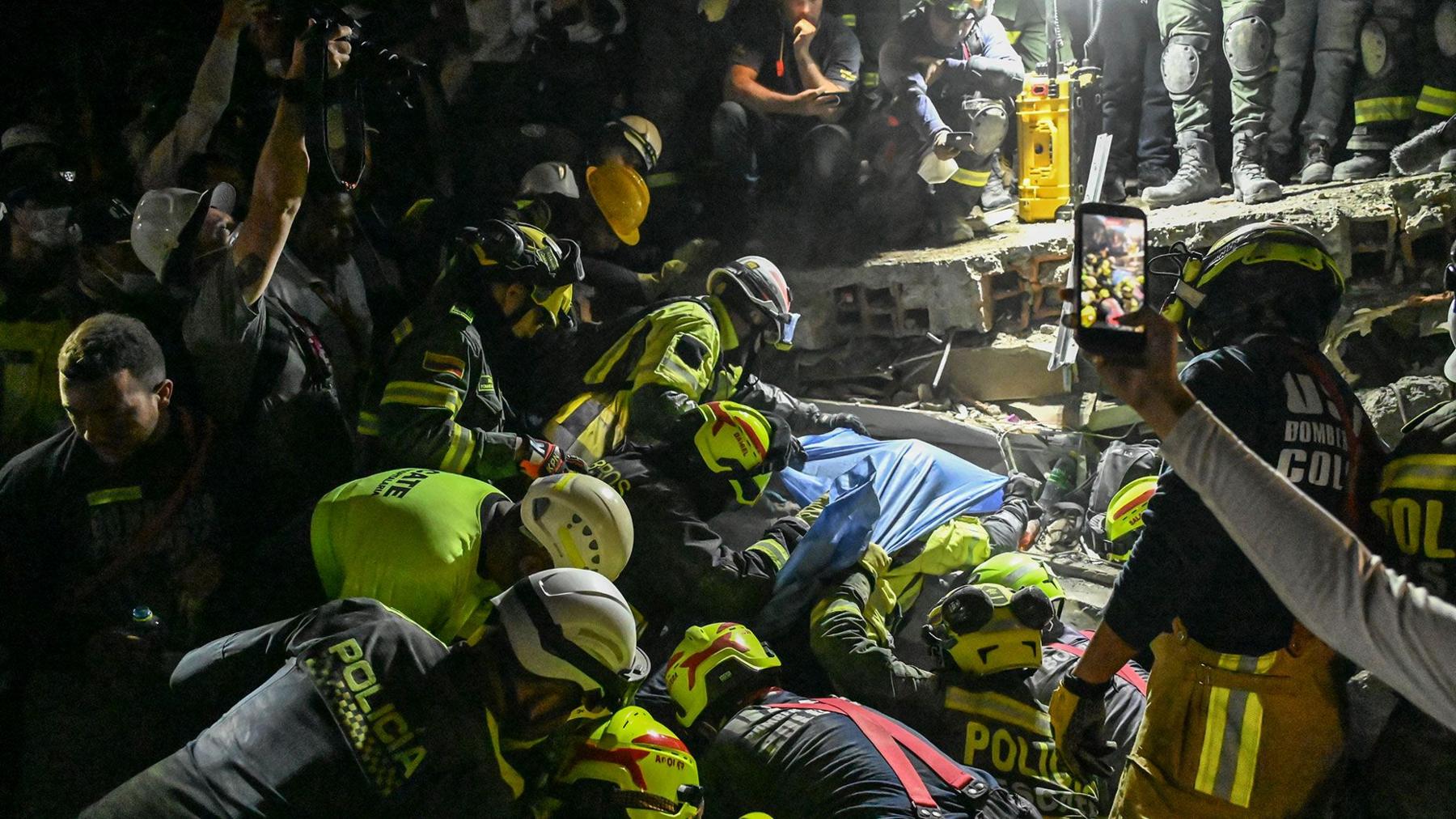
The rescue required digging two tunnels, one from above to supply oxygen, and another from the ground level to free the woman who was buried under four heavy concrete slabs. Local firefighters and police from Bogotá worked round the clock to secure the area before employing this dual‑tunnel technique.
National authorities report at least 265 deaths and 496 missing people following the quake. The city of Pereira recorded 79 confirmed fatalities, while Cali lost 95 lives. However, community coordination has saved 87 survivors in Cali and 18 others in Pereira.
The event underscores the importance of resilient infrastructure and community‑led emergency readiness. Building codes that consider seismic risk, along with rapid response teams and local volunteer networks, can dramatically reduce casualties in future events. Such lessons are vital as climate change amplifies extreme weather, increasing the urgency to adapt and protect vulnerable communities worldwide.