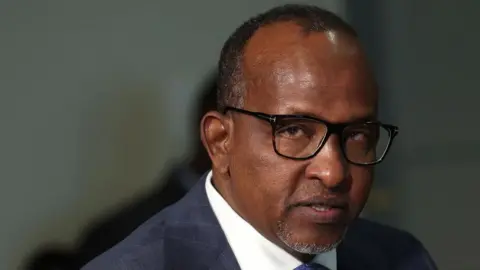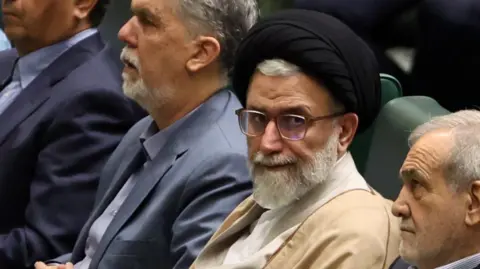
Iran's intelligence minister Esmail Khatib has been killed, the country's president has confirmed.
Masoud Pezeshkian said the cowardly assassination had left Iran in deep mourning, after Israel said on Wednesday it had killed Khatib in an air strike.
This comes a day after Israel announced it had also killed Iran's top security official, Ali Larijani, and the head of the paramilitary Basij force, Gholamreza Soleimani, in targeted strikes.
Since the assassination of Supreme Leader Ayatollah Ali Khamenei on the first day of the war on February 28, multiple senior Iranian officials and commanders have been killed in efforts by Israel and the United States to weaken the regime's leadership.
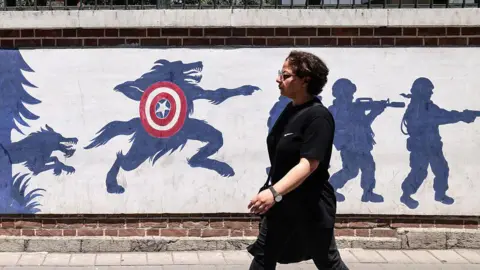
In a post on X, Pezeshkian extended his condolences to the Iranian people over the officials' deaths, adding he was certain their path will continue more steadfastly than before. A woman from Tehran commented that Khatib's death might make protests safer for people, suggesting that the likelihood of violence from leadership figures could decrease.
Earlier on Wednesday, Israel's defense minister announced that Khatib had been eliminated in an Israeli strike on Tehran.
He further stated that Prime Minister Benjamin Netanyahu and he had authorized the IDF to eliminate any senior Iranian official without additional approval, highlighting an aggressive stance toward Iranian leadership.
According to the Israeli Defense Forces, Khatib's ministry had played a significant role in suppressing protests and maintaining the regime's stance against Western influences.
Khatib was appointed by former president Ebrahim Raisi in 2021, having held numerous senior posts within the Iranian intelligence community. He was previously sanctioned by the US for cyber activities against its interests.
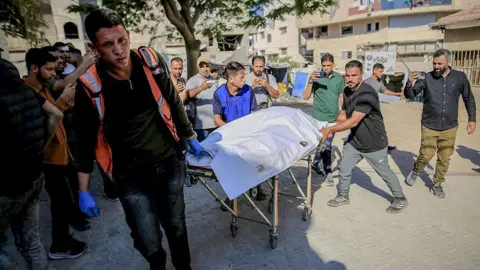
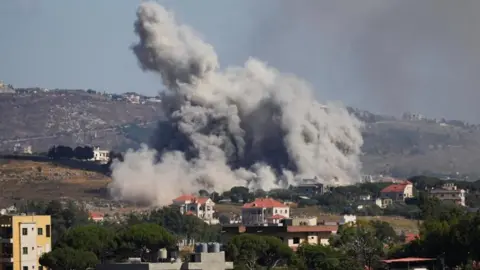
The ongoing conflict has had devastating humanitarian impacts, with reports indicating over 1,300 casualties due to strikes, illustrating the crisis unfolding not only within Iranian borders but across the Middle East. Global oil prices have surged as the geopolitical climate grows increasingly tense.