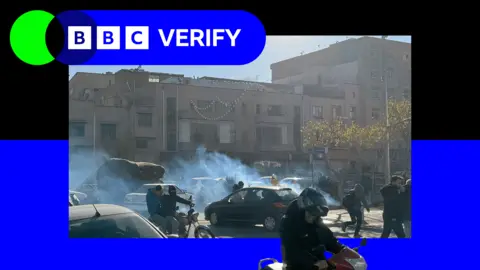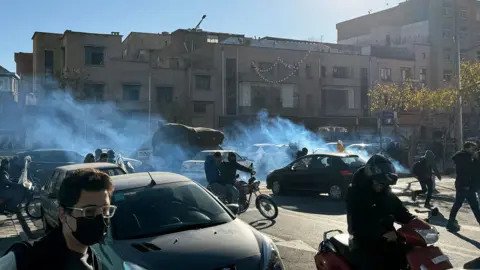
Iran is no stranger to street protests, but several factors surrounding the current unrest make it very serious.
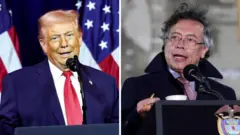
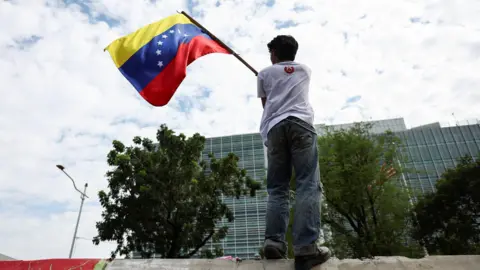
Monday marks the ninth day since demonstrations broke out, yet even four or five days were enough for President Trump to issue a direct warning to Iranian leaders over the treatment of protesters, saying the U.S. was locked and loaded. Then came the U.S. special forces operation targeting Nicolás Maduro in Venezuela, followed by a second warning on Sunday.
Such direct and potential threats from a sitting U.S. president, issued while protests are still ongoing, are highly unusual and could embolden demonstrators and encourage the unrest to spread further.
Iranian police and security forces have already responded violently almost from the outset, and reports by human rights groups claim that more than 20 people have already been killed. Now eyes are on Trump's possible move.
The protests, which began peacefully on Sunday, 28 December, were initially driven by public anger over soaring inflation and the sharp devaluation of the local currency against the U.S. dollar, which now stands at about 80% higher than a year ago.
Iran's economy is in deep trouble, with little prospect for growth this year or next. Official annual inflation stands at around 42%, with food inflation exceeding 70%, and some basic goods reportedly rising in price by more than 110%.
Vulnerable position
International sanctions led by the United States have played a major role in worsening economic conditions, but they are not the full story.
High-profile corruption cases in Iranian courts involving senior officials and their families have reinforced public anger and the belief that parts of the ruling elite are exploiting the crisis.
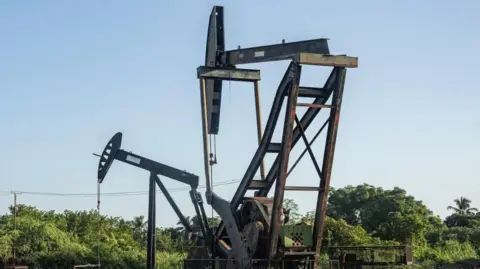
Many ordinary Iranians believe that certain officials and their relatives benefit directly from sanctions through special arrangements that allow them to control imports and exports, move oil revenues abroad, and profit from money laundering networks.
Even government officials believe those locally termed Sanctions Profiteers are to blame more than the sanctions themselves.
Merchants in Tehran's Grand Bazaar were among the first groups to openly protest, closing their shops in response to daily currency fluctuations and taking to the streets to demand government intervention to stabilize the markets.
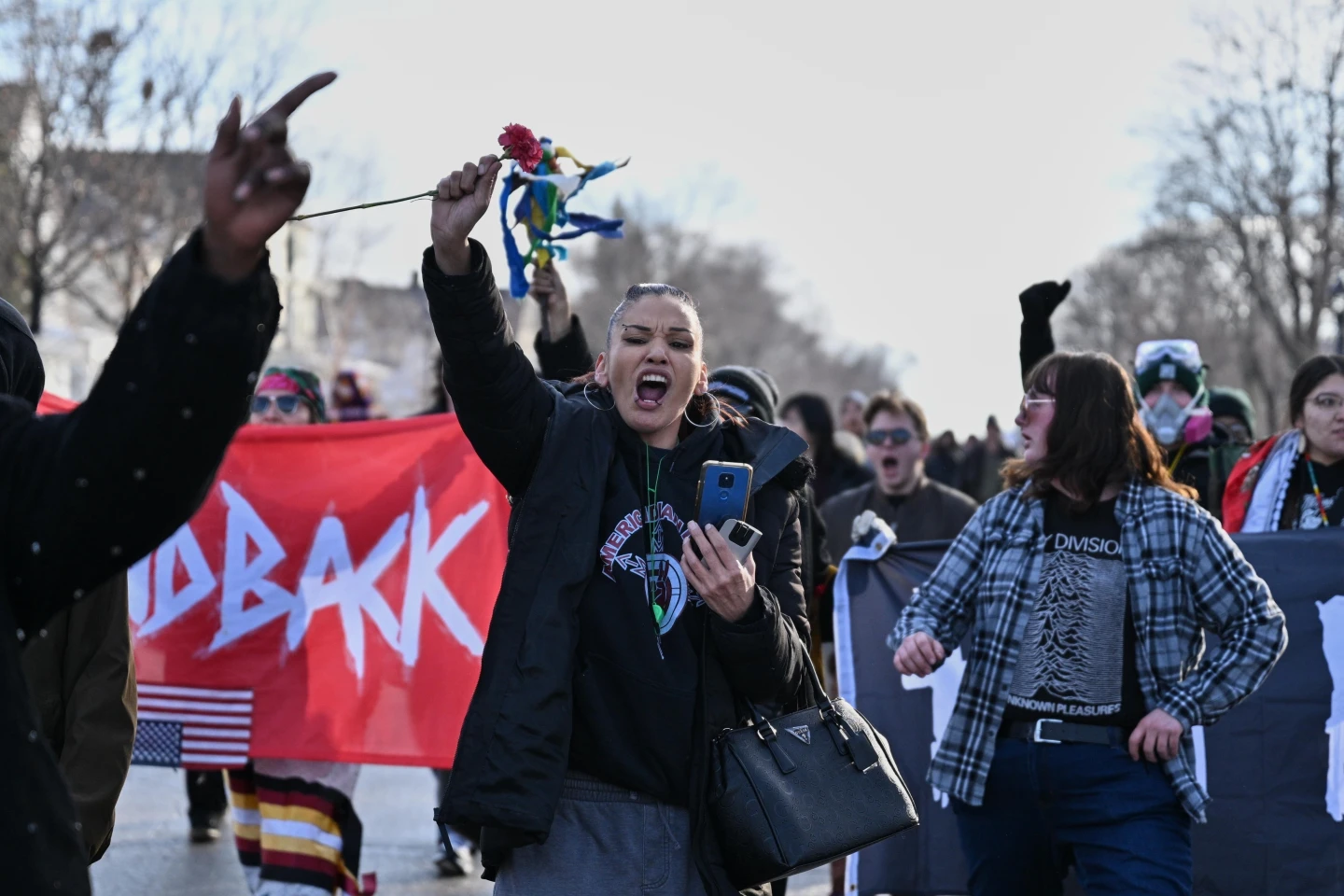
Demonstrations soon spread beyond the bazaar to other segments of society. Economic slogans quickly turned political, with calls to remove the entire Islamic Republic itself.
Students joined the protests, followed by small businesses in other cities and towns, and soon chants against Iran's supreme leader became a central feature of the demonstrations.
Although the current protests have spread rapidly and persisted, they have not yet reached the scale of the 2022 demonstrations, which saw the death of Mahsa Amini spark widespread unrest.
As pressure builds both inside and outside the country, security at home seems more distant than ever.