In brief
Hurricane Melissa has left a devastating mark on several Caribbean nations, with at least 32 fatalities reported due to flooding and high winds. As officials assess the significant damage—particularly in Jamaica and Cuba—there is a growing call for enhanced disaster preparedness and climate resilience strategies. The storm's trajectory indicates continued risks, highlighting the urgent need for communities to bolster their defenses against future climate-related disasters.
The scale of devastation left by Hurricane Melissa is becoming clear after the record-setting storm tore through Jamaica, Haiti, and Cuba, leaving at least 32 people dead.
Although downgraded from a Category 5 to a Category 1 storm, Melissa gathered speed as it swept through the Bahamas on Thursday and is expected to make landfall in Bermuda later.
The strongest storm to strike the Caribbean island in modern history, the hurricane sustained winds of 298 km/h (185 mph) at its peak—stronger than Hurricane Katrina, which devastated New Orleans in 2005, killing 1,392 people.
The US National Hurricane Centre (NHC) reported sustained winds of 165 km/h at 09:00 GMT on Thursday.
It warned of possible coastal flooding as the storm accelerated northeastward. Authorities in the Bahamas have since lifted hurricane warnings for the central and southern islands, as well as for the Turks and Caicos.
The country's Minister of State for Disaster Risk Management, Leon Lundy, urged residents to remain vigilant, saying: Even a weakened hurricane retains the capacity to bring serious devastation. Nearly 1,500 people were evacuated from vulnerable areas in what officials described as one of the largest operations in Bahamian history.
While flooding has disrupted parts of the archipelago, the ministry of tourism asserted that the majority of the country—including Nassau, Freeport, Eleuthera, and the Abacos—remains largely unaffected and open to visitors.
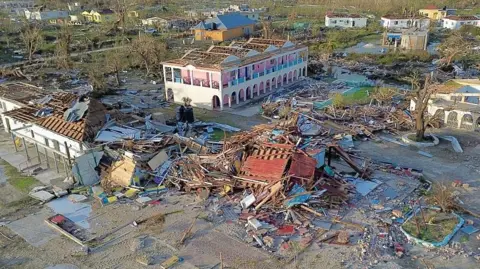
Across the wider Caribbean, Melissa's powerful winds have torn apart homes and buildings, uprooted trees, and left tens of thousands without power. In Cuba, residents of the country's second-largest city, Santiago de Cuba, worked with machetes to clear streets buried in debris. President Miguel Díaz-Canel announced considerable damage but did not provide a casualty figure.
In Jamaica, the impact was most severe in the southwestern parish of St Elizabeth, where knee-deep mud and washed-out bridges left towns like Black River cut off. Communication across Jamaica has been all but severed, with power lines and cellular networks down in many areas.
Communities have witnessed immense challenges; for instance, in Black River, officials reported a relative of one victim had to walk 15 miles (24 km) to report their loved one missing. Amidst the calamities, there is a silver lining as local politician Desmond McKenzie shared that amidst all this, a baby was safely delivered under emergency conditions. So there is... a baby Melissa.
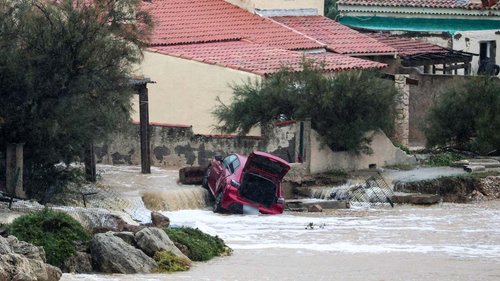
Haiti, already facing gang violence and a humanitarian crisis, suffered at least 23 deaths—10 of them children—due to flooding after days of relentless rain, even as the storm skirted its shores. The NHC projected that floodwaters across the Bahamas would subside by Thursday, but warned that conditions in Cuba, Jamaica, and Hispaniola would remain hazardous for several days.
As the storms grow stronger and more frequent, calls for climate resilience and improved disaster preparedness have intensified, spotlighting the imperative for coordinated international efforts to protect vulnerable regions from the escalating threats posed by climate change.