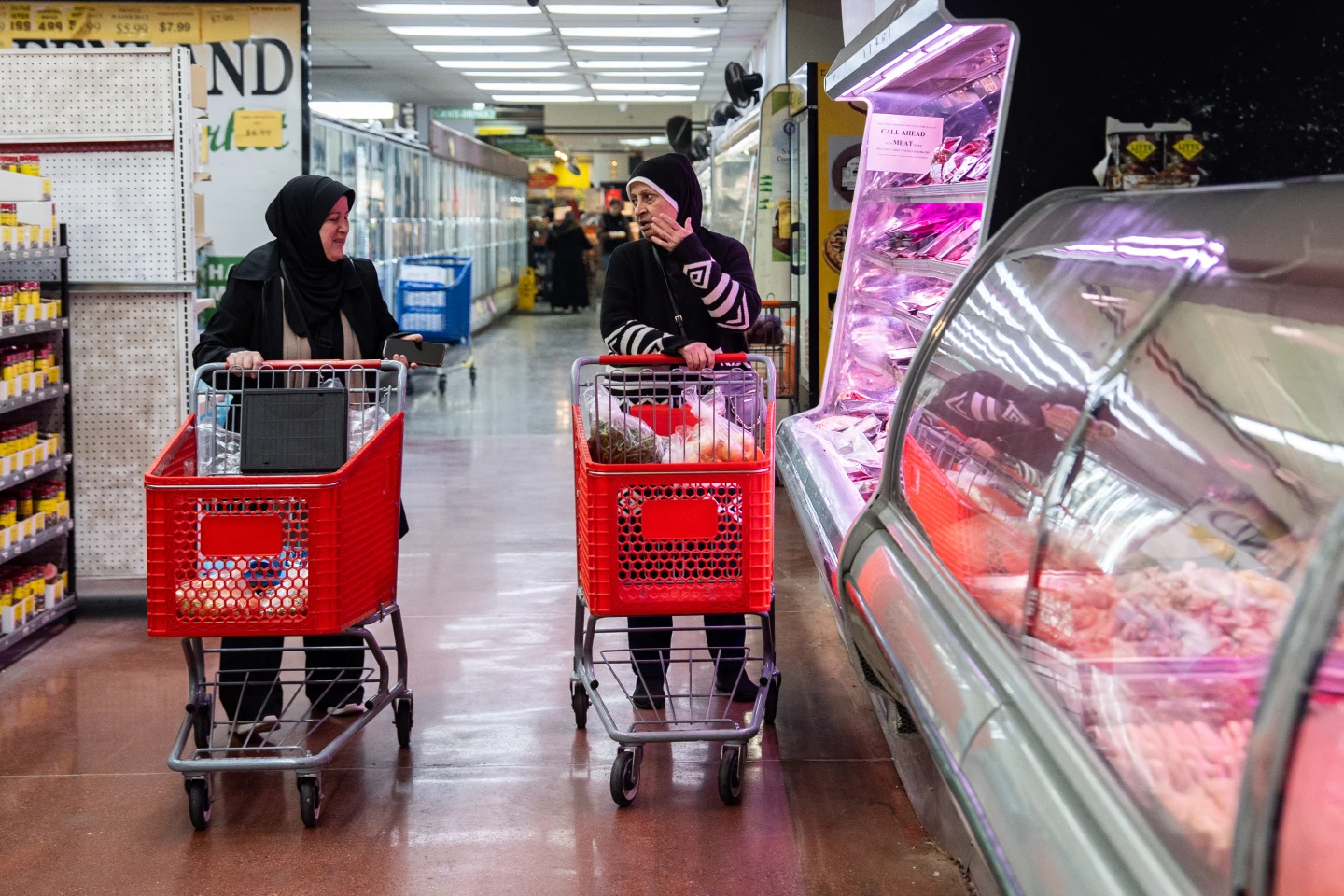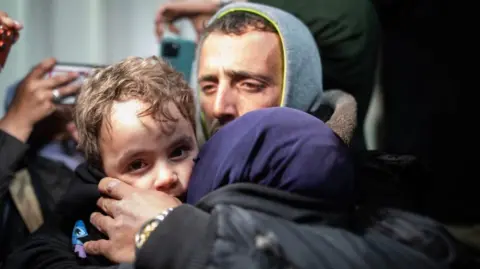
On Monday, two Gazan women shared their experiences after passing through the Rafah crossing, describing security checks conducted by the Abu Shabab militia, which collaborates with Israeli forces. Lamia Rabia, one of the women, recounted how they were escorted from the border to a checkpoint where the militia searched their belongings before further questioning by Israeli officials. 'They didn't speak with us, they only searched us,' she explained. Reports indicate that the military and militia checkpoints were operated jointly, a claim the Israeli Defense Forces (IDF) chose not to comment on.
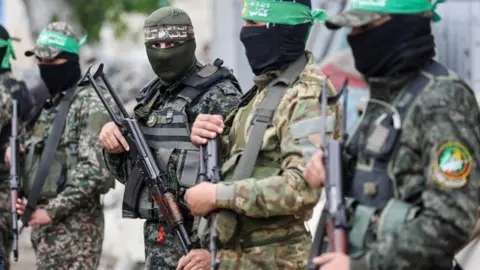
The Abu Shabab militia, identified as a group actively opposing Hamas, reportedly plays a significant role in ensuring security around the Rafah crossing, with their leader asserting the unit's crucial influence on the crossing's operations. Concerns have been raised by the European Union regarding reports of harsh treatment faced by travelers during this process, prompting discussions about potential changes in security oversight.
Despite an initial expectation that 50 patients would return to Gaza, only 12 managed to cross, demonstrating the operational challenges at this crucial border point. A Palestinian employee at the crossing stated that travelers had to wait hours before being selectively allowed to proceed through Israeli inspections. Meanwhile, many families were turned back with little explanation, reinforcing apprehensions about the efficiency of the new arrangements.
As the situation unfolds, it underscores the complexities surrounding Gaza's governance and the strategies in place to manage humanitarian access amid ongoing political tensions.
The Abu Shabab militia, identified as a group actively opposing Hamas, reportedly plays a significant role in ensuring security around the Rafah crossing, with their leader asserting the unit's crucial influence on the crossing's operations. Concerns have been raised by the European Union regarding reports of harsh treatment faced by travelers during this process, prompting discussions about potential changes in security oversight.
Despite an initial expectation that 50 patients would return to Gaza, only 12 managed to cross, demonstrating the operational challenges at this crucial border point. A Palestinian employee at the crossing stated that travelers had to wait hours before being selectively allowed to proceed through Israeli inspections. Meanwhile, many families were turned back with little explanation, reinforcing apprehensions about the efficiency of the new arrangements.
As the situation unfolds, it underscores the complexities surrounding Gaza's governance and the strategies in place to manage humanitarian access amid ongoing political tensions.