In the midst of a still shaky ceasefire, Gazans are taking the first tentative steps along the long road to recovery.
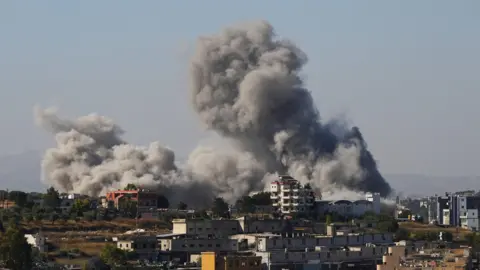
Bulldozers are clearing roads, shovelling the detritus of war into waiting trucks. Mountains of rubble and twisted metal are on either side, the remains of once bustling neighbourhoods.
Parts of Gaza City are disfigured beyond recognition.
This was my house, says Abu Iyad Hamdouna. He points to a mangled heap of concrete and steel in Sheikh Radwan, which was once one of Gaza City's most densely populated neighbourhoods.
It was here. But there's no house left.
Abu Iyad is 63. If Gaza ever rises from the ashes, he doesn't expect to be around to see it.
Nearby, 43-year-old Nihad al-Madhoun is picking through the wreckage of what was once a home. The building might well collapse but it doesn't deter him - he collects old breeze blocks and brushes thick dust off an old red sofa.
The sheer scale of the challenge is staggering with the UN estimating the cost of damage at £53bn ($70bn). Almost 300,000 houses and apartments have been damaged or destroyed, according to satellite data. The Gaza Strip is littered with 60 million tonnes of rubble mixed with dangerous unexploded bombs.
In all, more than 68,000 people have been killed in Gaza in the past two years. Amidst the destruction, it's hard to know where to begin.
Yahya al-Sarraj, Gaza City's Hamas-appointed mayor, surveys the ruins while pointing out that shops are starting to reopen, despite the modest returns.
This recovery is complicated by multiple proposals for reconstruction, including plans from high-profile international figures and local visions like the 'Phoenix plan' aimed at protecting existing infrastructure while restoring community identity. Yet, skepticism reigns as many Gazans express doubts towards externally imposed schemes.
Negotiations for funding and political arrangements are still ongoing, highlighting the complex intersection of local and global interests at play in determining Gaza's future.
For the residents like Abu Iyad, who are just trying to survive each day, the visions of reconstruction feel far removed from their reality.
As bulldozers continue clearing the wreckage, they ponder the immediate needs of water and shelter, sometimes taking refuge in makeshift tents within the rubble of their former lives.