In brief
As US sanctions continue to cripple Venezuela's oil exports, the country has turned to a network of 'ghost ships' to smuggle oil. This series of tactics includes ship name changes, identity theft of scrapped vessels, and disabling tracking systems. The resurgence of these activities highlights the challenges faced by sanctions and the emerging global trade dynamics in oil from sanctioned nations.
In a further escalation of tension between the United States and Venezuela, President Donald Trump has ordered a naval blockade to stop sanctioned oil tankers from entering and leaving the South American country.
Venezuela - which has the world's largest proven oil reserves - is highly dependent on revenues from its oil exports to finance its government spending.
But US sanctions targeting Venezuela's state-run oil company PDVSA have made exporting oil difficult for the Venezuelan government, leading them to resort to a fleet of ghost ships.
As of last week, more than 30 of the 80 ships in Venezuelan waters or approaching the country were under US sanctions, according to data compiled by TankerTrackers.com.
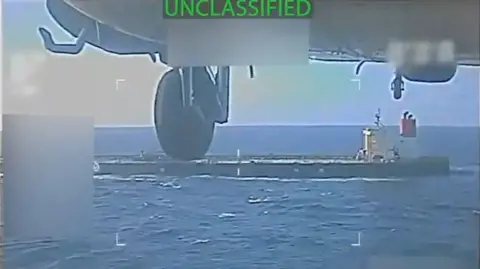
One of the most common strategies ghost tankers use is to frequently change their name or flag - sometimes several times in a month. For example, the tanker seized recently was called The Skipper, having been sanctioned by the US Treasury for its alleged role in an oil-smuggling network.
Ghost fleets are not unique to Venezuela; they are becoming increasingly common among other countries under Western sanctions like Russia and Iran. Financial intelligence estimates that one in five oil tankers globally may be involved in smuggling oil from sanctioned countries.
Despite the sanctions, which were originally imposed by Trump in 2019, Venezuelan oil exports have recently seen a partial recovery, sending around 920,000 barrels per day as of November 2025. This indicates that the government's adaptive strategies, particularly through the 'ghost fleet', have allowed it to sustain its oil trade.
The use of ghost ships represents a significant challenge for the efficacy of sanctions, revealing the complexities of global oil markets and the lengths to which sanctioned countries will go to continue their oil exports.