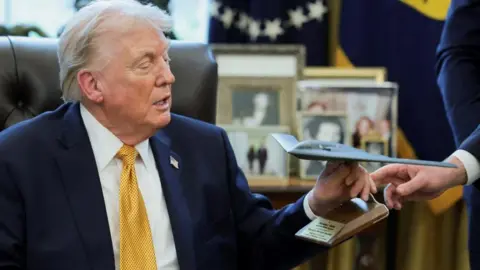
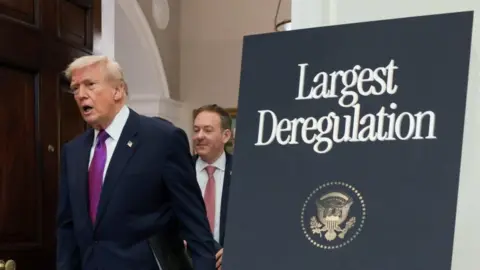
At a recent cabinet meeting, Donald Trump projected that the future Republican presidential candidate could be among his advisers.
Trump hinted at potential electoral rivalries without signaling his own intentions, stating emphatically, It's not going to be me. As he nears the end of his current term, the anticipation surrounding the 2028 presidential race intensifies, with questions about the direction of the MAGA movement that transformed the Republican Party.
Recent local elections showed weakening support among minority constituencies crucial for Trump's past victories, while intra-party tensions splinter the coalition. Notably, Congresswoman Marjorie Taylor Greene has distanced herself, suggesting Trump has lost touch with core voters.
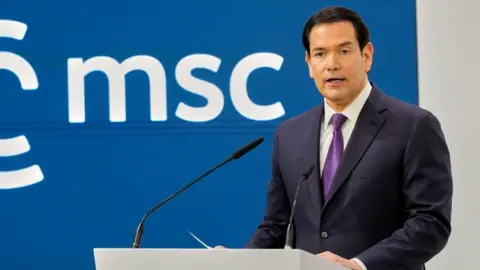
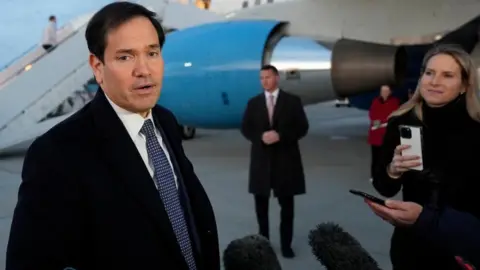
In the cabinet room, aspirants eyeing Trump's legacy include Vice-President JD Vance and Secretary of State Marco Rubio, whose divergent pathways reflect the coalition's struggles. As discussions unfold, the GOP faces critical choices about its future direction, particularly concerning public sentiments, candidate preferences, and escalating internal conflicts over policies.
The urgency to unite the MAGA base, coupled with evolving voter demographics, provides a daunting challenge ahead of the pivotal mid-term elections of 2026. Trump's party must adapt, lest it risk consolidating power under a new leader, with the looming specter of competing ideologies.
As Trump's narrative continues, the foundations of MAGA illustrate deeper populist trends in American politics, signaling that even in a post-Trump era, the essence of this movement could persist, reshaping the contours of conservatism in America.