In brief
In the aftermath of a ceasefire agreement, 195 bodies have been returned to Gaza from Israel. Gaza's medical team, operating under dire conditions with inadequate resources, faces immense pressure to identify the dead. Many bodies showed signs of torture, and doctors highlight the urgent need for proper forensic investigations to ascertain the circumstances of their deaths. Allegations of human rights violations and the handling of these bodies raise serious concerns about the treatment of detainees in Israeli custody.
Out of a single room, with no DNA testing facilities or cold storage units of its own, the forensics team at Gaza's Nasser hospital face the challenges brought by peace.
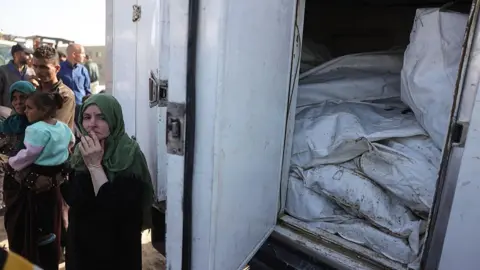
Over the past eleven days, 195 bodies have been returned to Gaza by Israeli authorities, in exchange for the bodies of 13 Israeli hostages, under the terms of Donald Trump's ceasefire deal.
Photographs released by Gaza's medical authorities show some of the bodies badly decomposed and arriving in civilian clothes or naked except for underwear, some with multiple signs of injury. Many have their wrists tied behind their backs, and doctors say some bodies arrived blindfolded or with cloth roped around their necks.
The forensic team at Nasser hospital are working with almost no resources to answer vast questions about torture, mistreatment, and identity.
The head of the unit, Dr. Ahmed Dheir, said one of their biggest limitations is a lack of cold storage space. The bodies arrive in Gaza thoroughly frozen and can take several days to thaw out, ruling out even basic identification methods like dental history, let alone any deeper investigation or post-mortem (autopsy).
The situation is extremely challenging, he said. If we wait for the bodies to thaw, rapid decomposition begins almost immediately, putting us in an impossible position [because] we lose the ability to examine the remains properly. So the most viable method is to take samples and document the state of the bodies as they are.
The BBC has viewed dozens of photographs of the bodies, many of them shared by Gaza's health authorities, others taken by colleagues on the ground. We spoke to several of those involved in examining the bodies in Gaza, as well as families of the missing, human rights groups, and Israeli military and prison authorities.
Dr. Alaa al-Astal, one of the forensic team at Nasser hospital, said some of the bodies arriving there showed signs of torture, such as bruises and marks from binding on the wrists and ankles.
There were extremely horrific cases, where the restraint was so tight that blood circulation to the hands was cut off, leading to tissue damage and clear signs of pressure around the wrists and ankles, he said.
Some of the images we saw from the unit clearly show deep indentations or tightly-fastened cable-ties on the wrists and arms and ankles. One photograph appears to show bruising and abrasion that would confirm that ties had been used while the person was still alive.
All three forensic experts said that some of the markings raised questions about what had happened, but that it was difficult to reach concrete conclusions about abuse or torture without post-mortems.
Dr. Dheir emphasized that when a person is naked, with their hands tied behind their back, and visible restraint marks on their wrists and ankles, it indicates that they died in that position, thus violating international law.
As families of those missing gather at the hospital gates, Dr. Dheir and his staff are under intense pressure to identify the dead and provide answers about what happened to them. So far, only some 50 bodies have been positively identified – mostly through basic details like height, age, and obvious previous injuries.
Many families of the missing attended the burial of the unnamed dead, expressing their grief and frustration as they searched for their loved ones in the uncertainty of war.
Donald Trump's ceasefire deal has brought some relief for Gaza, but little closure for the families of the most affected, left burying a body in place of a brother, husband, or son.