In brief
South Africa, which has the largest population of HIV-positive individuals globally, is struggling to manage its response to the epidemic after substantial cuts to U.S. funding. The loss of approximately $400 million a year poses significant risks, as local government funding only partially compensates. Innovative mobile clinics are being used to reach underserved populations, yet the fate of these services remains uncertain without robust financial support.
South Africa's battle against HIV/AIDS is facing an uphill struggle due to a significant decrease in U.S. funding, which has been a cornerstone of the country’s response strategies. The cuts, initiated shortly after former U.S. President Donald Trump's inauguration, are leaving many public health initiatives in jeopardy.
South Africa, home to approximately 13% of its population living with HIV, previously relied on annual U.S. contributions of about $400 million to fund critical health programs targeting the epidemic. However, the sudden halt of these funds raises concerns about the future of treatments and services that are vital for the country's HIV-positive individuals.
The South African government attempted to mitigate the financial loss with $46 million in emergency funding, which represents only a fraction—about 11.5%—of the lost revenue. In addition, a temporary "bridge plan" of $115 million from the U.S. has been established, lasting through March, but it is insufficient as a long-term solution.
Health experts, including Professor Linda-Gail Bekker, co-founder of the Desmond Tutu Health Foundation, express grave concerns about the impacts of the funding cuts. They have noted a drop in HIV testing rates and service accessibility, especially affecting those who may not feel comfortable visiting public health facilities.
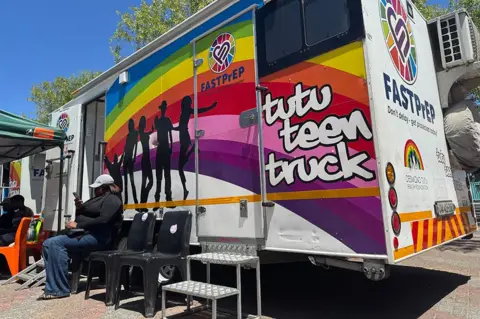
Mobile clinics, such as those operated by the Tutu Foundation, play a crucial role in providing healthcare and are crucial in areas where residents face barriers accessing government services. These initiatives directly support individuals like Esethu, a young woman who seeks preventative HIV medication, exemplifying the human impact behind the numbers.
As the cuts to U.S. funding continue to reverberate through South Africa's health landscape, officials and organizations are looking for alternative funding sources to prevent a resurgence of HIV infections. The urgency to stabilize and expand these healthcare services only grows as the country continues to grapple with an ongoing HIV/AIDS crisis.
Experts warn that without proactive measures and adequate funding, the hard-won advancements in the fight against HIV can be reversed, impacting not just South Africa but global health efforts to combat the epidemic.