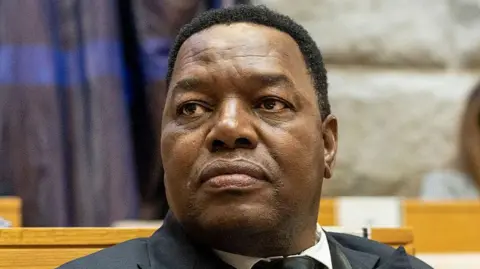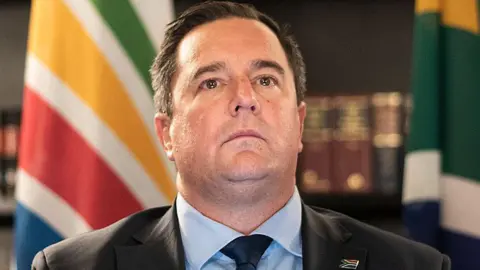
John Steenhuisen, the leader of South Africa's Democratic Alliance (DA), has announced he will not seek re-election as head of the party in April. This decision comes at a pivotal time, as it threatens to destabilize the coalition government formed with the African National Congress (ANC) after the ANC lost its parliamentary majority in 2024.
Steenhuisen, who has been at the helm of the pro-business DA since 2019 and also serves as the agriculture minister under President Cyril Ramaphosa, had been anticipated to run for leadership again. However, internal controversies—including a fallout with senior party member Dion George and previous allegations of misuse of a party credit card—seemed to have influenced his choice. He clarified that his focus will now turn entirely towards addressing the severe foot-and-mouth disease outbreak impacting the agricultural sector, which he described as the most severe in the nation's history.
His political journey began at the age of 22, climbing through local and then regional leadership ranks before commanding the DA two decades later. Under his leadership, the DA joined forces with the ANC to form a government of national unity, marking an unprecedented political alliance that allowed the ANC, historically significant for ending apartheid, to remain in power despite losing majority status.
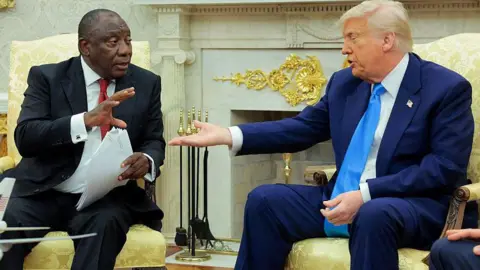
Despite some friction, Steenhuisen’s partnership with Ramaphosa has shown signs of effectiveness, especially highlighted during a recent political encounter in the United States. No candidates have emerged yet for his succession, but Cape Town's mayor Geordin Hill-Lewis is rumored to be a potential successor.
As the DA braces for transition, the looming question remains: What will be the ramifications for South Africa's coalition politics and its approach to pressing issues like agriculture and public health?
Steenhuisen, who has been at the helm of the pro-business DA since 2019 and also serves as the agriculture minister under President Cyril Ramaphosa, had been anticipated to run for leadership again. However, internal controversies—including a fallout with senior party member Dion George and previous allegations of misuse of a party credit card—seemed to have influenced his choice. He clarified that his focus will now turn entirely towards addressing the severe foot-and-mouth disease outbreak impacting the agricultural sector, which he described as the most severe in the nation's history.
His political journey began at the age of 22, climbing through local and then regional leadership ranks before commanding the DA two decades later. Under his leadership, the DA joined forces with the ANC to form a government of national unity, marking an unprecedented political alliance that allowed the ANC, historically significant for ending apartheid, to remain in power despite losing majority status.
Despite some friction, Steenhuisen’s partnership with Ramaphosa has shown signs of effectiveness, especially highlighted during a recent political encounter in the United States. No candidates have emerged yet for his succession, but Cape Town's mayor Geordin Hill-Lewis is rumored to be a potential successor.
As the DA braces for transition, the looming question remains: What will be the ramifications for South Africa's coalition politics and its approach to pressing issues like agriculture and public health?