In brief
The charming town of Knysna, situated along South Africa's Garden Route, is on the brink of a water crisis due to failing infrastructure and a prolonged drought. With over half of its potable water lost to leaks, the town has declared a state of disaster. Local authorities are implementing emergency measures, while NGOs are providing assistance to those most affected. The looming 'day zero' could mean rationing water as residents struggle to secure their supply amidst significant shortages.
The picturesque South African tourist resort of Knysna is sounding alarm bells as fears mount that its water supply could soon run dry—a moment referred to as day zero. A state of disaster has already been declared in anticipation of a serious water crisis affecting around 100,000 residents of this coastal town.
Knysna, known for its stunning beaches and serene waters, is facing an ongoing struggle caused by a combination of aging infrastructure and changing climate patterns. Official estimates indicate that roughly 55% of the town's drinking water is lost through leaking pipelines, a silent but substantial drain on its resources.
Moreover, a recent drought has exacerbated the crisis, resulting in significantly lowered water levels in the town's primary storage dam, the Akkerkloof dam, which currently holds reserves sufficient for just 20 days. With authorities stepping in to enact water restrictions and emergency funding, the timeline for when day zero will hit remains uncertain.
Residents have already felt the pressure of water shortages; last October, a local retirement center experienced its own rendition of day zero after a fault at a municipal plant caused a 10-day water outage. The owner has invested heavily in backup systems to prevent any similar incidents.
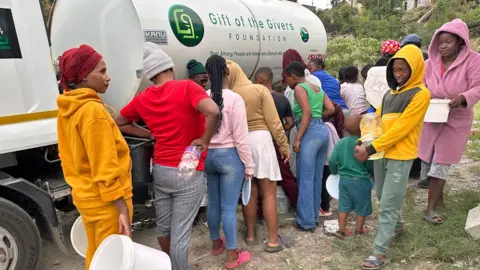
Local NGOs, such as Gift of the Givers, are responding to the emergency by delivering urgent water supplies to vulnerable residents who lack resources to secure their own backup water systems. They bring thousands of liters in tankers on a near-daily basis to help those in need, while local reactions to this crisis reflect deep reservoirs of gratitude juxtaposed with rising anxiety about the future.
Water rationing has already begun, limiting daily usage to 50 liters per person—substantially below the UK average of 142 liters. Local tourism officials are concerned that references to day zero could dissuade visitors, urging a shift in messaging towards a more proactive approach to water conservation.
While Knysna grapples with immediate solutions, longer-term strategies are being planned. The council has received a financial boost for infrastructure repairs and sustainable solutions like drilling new boreholes and exploring desalination options.
In recognizing the graveness of the situation, experts highlight the need for broader awareness. In regions like Khayalethu township, nearby Knysna residents cope with ongoing irregular water supply, but the current discussions surrounding day zero are shedding light on their struggles for basic access to water—a reality experienced by millions in South Africa.