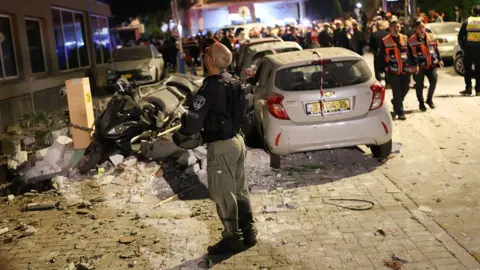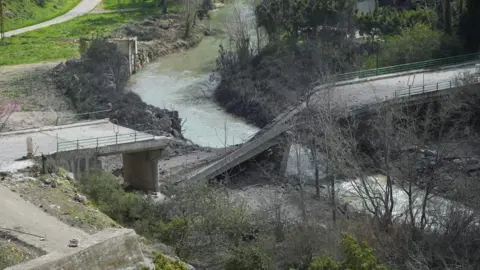
Israeli air strikes have destroyed two bridges over the Litani River linking southern Lebanon with the rest of the country, the military says. It comes hours after the Israeli military said it would target crossings it alleged were being used by the Hezbollah armed group to move fighters and weapons. Elsewhere, Israeli strikes hit multiple locations in Beirut, killing at least 12 people and wounding 27, Lebanese authorities said. The escalation marks a widening of Israeli strikes beyond the southern suburbs into central Beirut. The Lebanese health ministry states that 968 people, including at least 111 children, have been killed since March 2.
Lebanon was drawn into the US-Israel war against Iran when Iran-backed Hezbollah fired missiles into Israel. Israel responded with air strikes and later sent ground troops into southern Lebanon. Defence Minister Israel Katz stated that the bridges were targeted on Wednesday as part of a direct action against Hezbollah's use of Lebanon's state infrastructure to advance terrorist activity. In the background, recent warnings from Israel for civilians near the Litani crossings to evacuate have exacerbated an already severe displacement crisis. More than a million people have been forced to flee their homes, predominantly in the south and east of the country, as well as parts of southern Beirut where Hezbollah's presence is strongest.
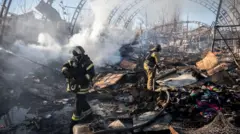
Recent Israeli strikes have extended their reach into Beirut with devastating effects. A building in Beirut's city centre was destroyed earlier, further heightening regional tensions. While the situation in southern Lebanon remains dire, the humanitarian impact of the conflicts, particularly on civilians, continues to grow amid this relentless barrage.
As the strikes continue, the fragile balance of security in the region is further disrupted, as the Litani River remains a focal point of tension under UN Security Council Resolution 1701, which prohibits armed groups from operating south of the river. Israeli officials claim Hezbollah maintains a significant presence in this area, which complicates the already catastrophic humanitarian and political landscape in Lebanon.
Lebanon was drawn into the US-Israel war against Iran when Iran-backed Hezbollah fired missiles into Israel. Israel responded with air strikes and later sent ground troops into southern Lebanon. Defence Minister Israel Katz stated that the bridges were targeted on Wednesday as part of a direct action against Hezbollah's use of Lebanon's state infrastructure to advance terrorist activity. In the background, recent warnings from Israel for civilians near the Litani crossings to evacuate have exacerbated an already severe displacement crisis. More than a million people have been forced to flee their homes, predominantly in the south and east of the country, as well as parts of southern Beirut where Hezbollah's presence is strongest.
Recent Israeli strikes have extended their reach into Beirut with devastating effects. A building in Beirut's city centre was destroyed earlier, further heightening regional tensions. While the situation in southern Lebanon remains dire, the humanitarian impact of the conflicts, particularly on civilians, continues to grow amid this relentless barrage.
As the strikes continue, the fragile balance of security in the region is further disrupted, as the Litani River remains a focal point of tension under UN Security Council Resolution 1701, which prohibits armed groups from operating south of the river. Israeli officials claim Hezbollah maintains a significant presence in this area, which complicates the already catastrophic humanitarian and political landscape in Lebanon.