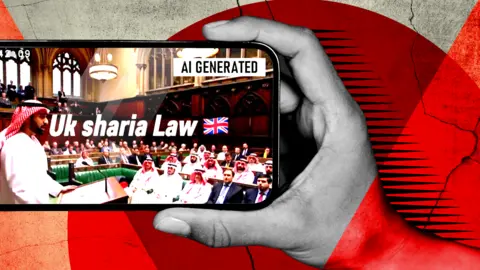
The Facebook page 'Great British People', sporting 1.3 million views for click-bait videos featuring an elderly white Brit expressing distress over his pension, has highlighted a disturbing trend in digital misinformation. While claiming to represent the voices of Britons, the page is actually managed by individuals in Sri Lanka, casting doubt on its authenticity.
These deceptive AI-generated videos often emphasize a dystopian blend of mass immigration and decline, misleading viewers through emotionally charged manipulations. Reports state that many of the interconnected accounts amplifying these narratives originate from various global locations, including Sri Lanka and the US, with some even linked to hostile foreign entities.
Experts note a concerning trend where the public may struggle to differentiate between authentic and AI-generated content. London Mayor Sir Sadiq Khan has voiced alarm over these narratives, suggesting that they pose a risk to the UK’s international reputation. He stated that while some individuals behind these accounts seek profit, others appear to have political motivations, potentially fostering division and distrust among communities.
Research from London's City Hall corroborates these findings, indicating a surge in AI-generated posts manipulating public opinions surrounding immigration. The repercussions of such content extend beyond simple entertainment; they can sway public attitudes, influence policy discussions, and create social discord.
In light of these revelations, social media platforms are urged to heighten their efforts against the dissemination of misinformation. This includes creating more stringent content guidelines to ensure transparency and accuracy in the information shared with global audiences.
Measuring attitudes towards immigration and social issues through engagement with AI-driven narratives requires a nuanced understanding. Public awareness and discernment are critical to navigating a landscape increasingly littered with misinformation.