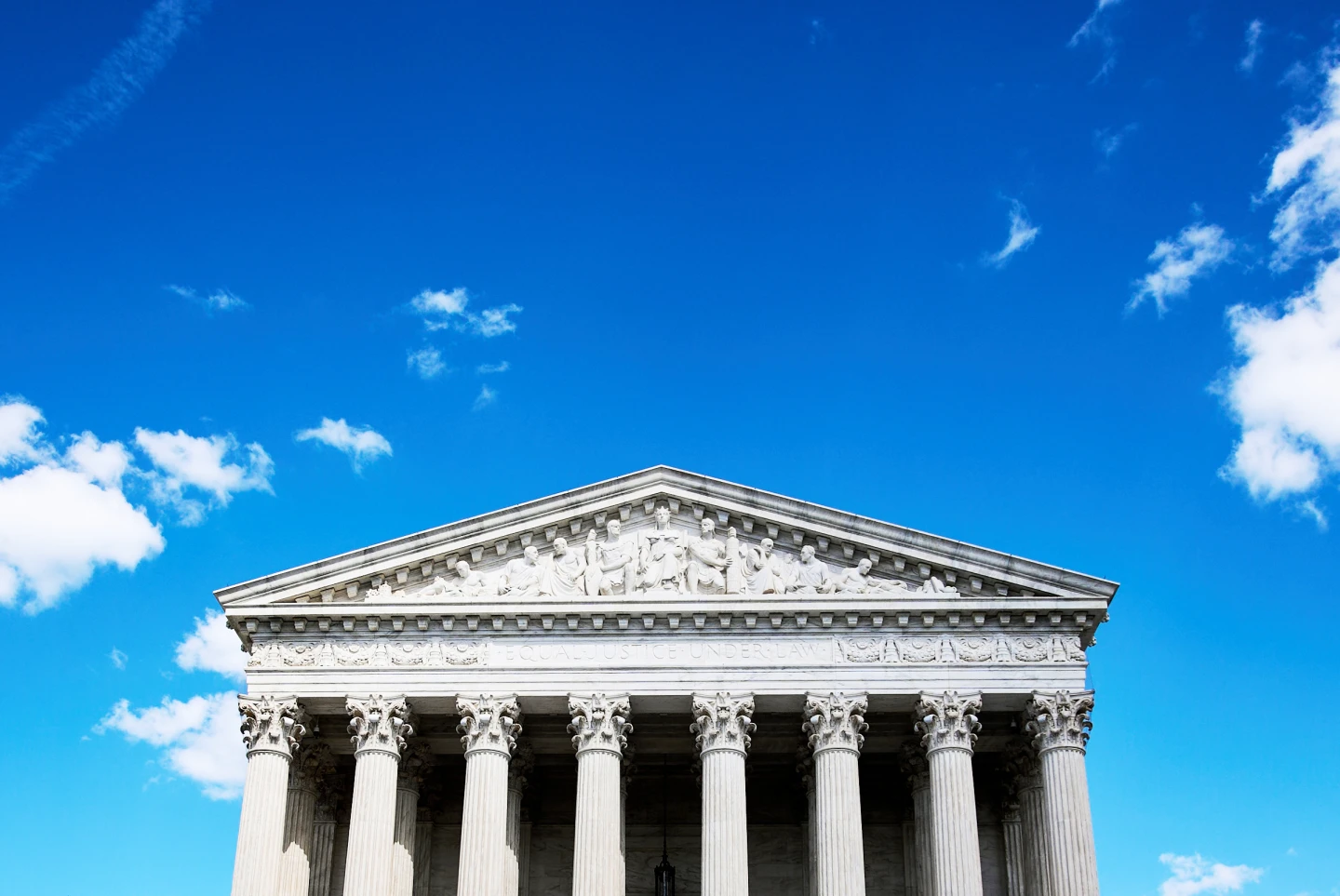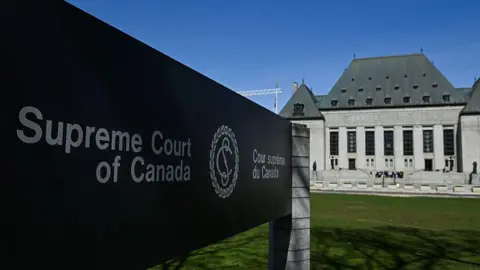
A controversial secularism law in Quebec is heading to Canada's Supreme Court - but the outcome will impact much more than religious expression in Canada, legal experts say.
The case has the potential to test national unity and the balance between courts and elected officials.
This case is probably going to be the most important constitutional case in a generation, said Christine Van Geyn, executive director at the Canadian Constitution Foundation.
At the heart of the case is Bill 21, which bars civil servants like judges, police officers, and teachers from wearing religious symbols at work. It was passed in 2019, by the governing Coalition Avenir Quebec (CAQ).
But to withstand legal challenges, legislators employed a unique Canadian invention, the controversial notwithstanding clause. That legal loophole allows governments to override certain constitutional rights, including freedom of religion and equality rights.
The Canadian Civil Liberties Association (CCLA) called Quebec's arguments in court spine-chilling.
Could a government invoke [the clause] to ban abortion? To criminalize political speech critical of the government? To legalize torture? the CCLA wrote in a recent op-ed in French-language newspaper Le Devoir.
On Monday, the court will begin four days of hearings on a constitutional challenge to Bill 21, with more than 50 interveners including the federal government.
What is Bill 21?
As in France, Quebec's state secularism - or laïcité - is central to its identity. Similar to the concept of America's separation of church and state, proponents of laïcité believe that state institutions should be religiously neutral.
Supporters of Bill 21 argue that it's a reasonable step towards enshrining the separation of church and state in Quebec, while critics say it is discriminatory, has made it more difficult for religious minorities to integrate, and that it unfairly targets Muslim women.
In an attempt to insulate the legislation from legal battles, the CAQ pre-emptively included the notwithstanding clause in the bill.
That clause is section 33 of the Canadian constitution. It allows a provincial or federal government to override certain fundamental freedoms of religion, expression, and association; as well as legal and equality rights.
The clause is subject to renewal and can be extended indefinitely, leading to concerns regarding the rights it may undermine.
Opposing Views
The Canadian Civil Liberties Association and Ichrak Nourel Hak, a Muslim teacher in Quebec who wears a hijab, are among those who sought leave to appeal. They argue that Bill 21 discriminates against specific religious minority groups.
In contrast, Quebec maintains that the bill supports a sense of shared civic identity and that its actions are constitutionally protected under the notwithstanding clause.
National Unity and Government Power
This case's ruling will not only affect religious expression but could redefine the authority of Canada’s governments and the courts. With the federal government and multiple provinces intervening, the outcome could instigate a critical reevaluation of how legislative power interacts with constitutional rights going forward.