In brief
A study reveals that prehistoric octopuses, measuring up to 62 feet long, were formidable hunters in the ancient marine ecosystem. Researchers analyzed fossilized jaws from Japan and Canada, uncovering their potential role as apex predators in a time dominated by sharks and marine reptiles. These findings provide new insights into the evolutionary history of octopuses and their ecological significance in prehistoric food webs.
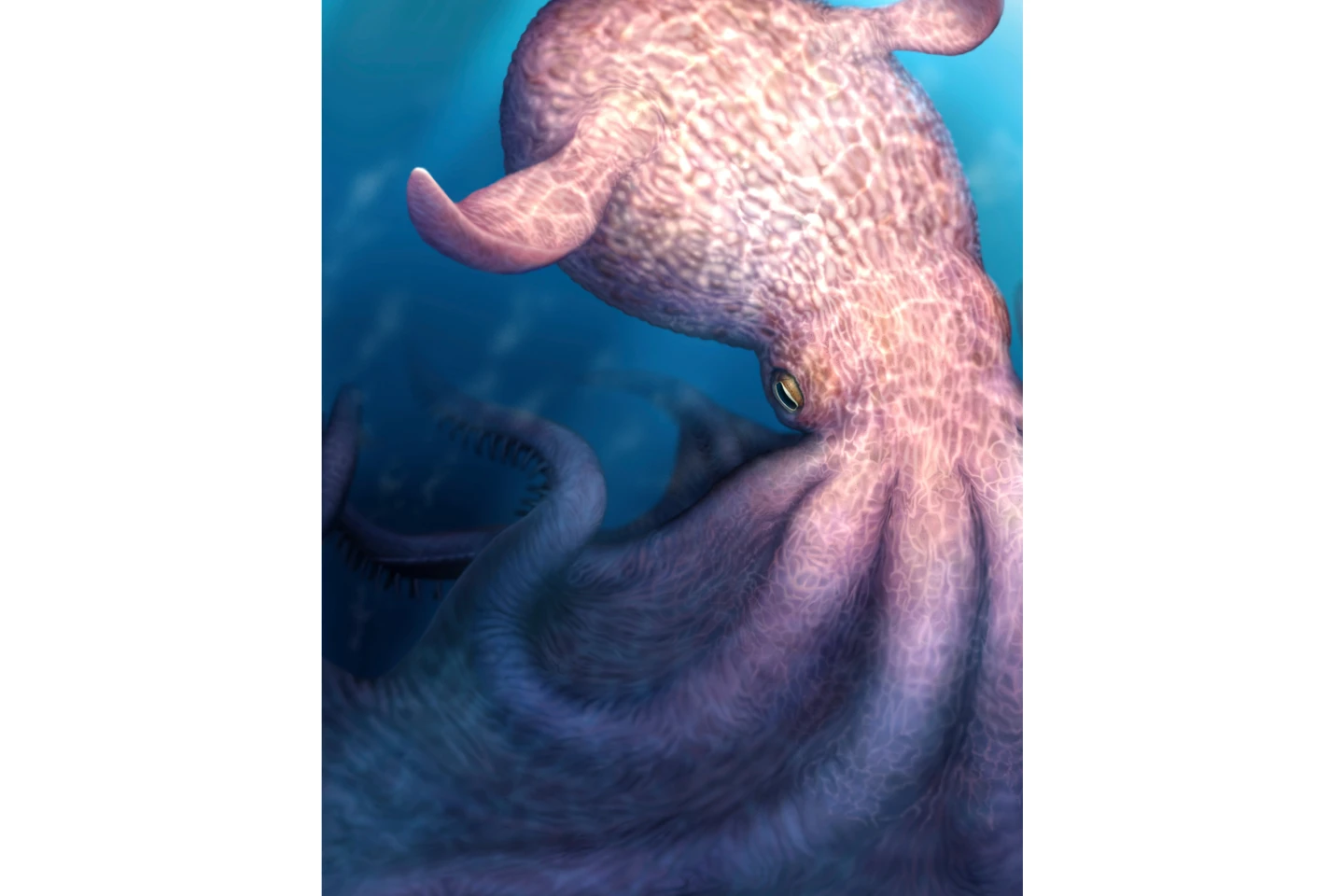
NEW YORK (Echosphere) — Recent studies suggest that ancient octopuses were among the largest predators in prehistoric oceans, with some species reaching lengths of over 60 feet (18 meters). This challenges the traditional view that primarily attributes apex predator status to marine reptiles such as mosasaurs and plesiosaurs during the age of dinosaurs.
The research team analyzed fossilized jaws from 15 ancient octopus specimens, previously discovered in Japan and Vancouver Island, Canada. Using a groundbreaking method called digital fossil mining, scientists identified additional jaws, further expanding our understanding of these colossal creatures.
These ancient octopuses, often likened to mythical krakens, were equipped with tough beaks capable of crushing shells and breaking bones, implying a predatory lifestyle that included hunting fish and snails. Co-author Yasuhiro Iba from Hokkaido University highlighted that the largest jaws exhibited wear and tear consistent with the repetitive crushing of hard-shelled prey.
Insights into the size and predatory behavior of these octopuses offer a tantalizing glimpse into the complex dynamics of ancient ecosystems. However, without direct evidence of their diet, researchers can only speculate about their feeding habits and ecological interactions with other marine predators.
Though much remains to be uncovered, the study signifies an important step in reconstructing the marine food web of the past. As paleontologist Neil Landman from the American Museum of Natural History noted, It’s a big old planet, so we have lots to look at to piece together the marine ecosystem through time.”
The findings were published in the latest issue of the journal Science on Thursday, marking a significant contribution to the field of paleontology and our understanding of marine life evolution.