In brief
In a landmark trade deal, Canada announced it would significantly ease tariffs on Chinese electric vehicles while China reciprocates by lowering tariffs on key Canadian agricultural goods. Prime Minister Mark Carney emphasizes the need for Canada to establish its own trade direction amid uncertainties with the US, recognizing a shift towards a more predictable relationship with China.
Prime Minister Mark Carney's new approach to Canada's foreign policy can perhaps be distilled in one line: We take the world as it is, not as we wish it to be.
That was his response when asked about the deal struck with China on Friday, despite concerns over its human rights record and nearly a year after he called China the biggest security threat facing Canada.
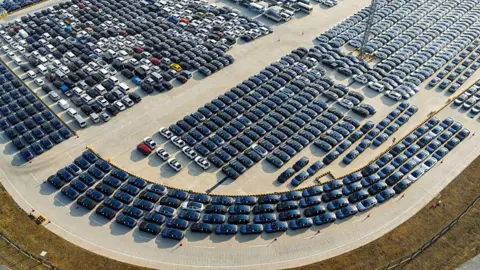
The deal will see Canada ease tariffs on Chinese electric vehicles that it imposed in tandem with the US in 2024. In exchange, China will lower retaliatory tariffs on key Canadian agricultural products.
Experts told the BBC the move represents a significant shift in Canada's policy on China, one that is shaped by ongoing uncertainty with the US, its largest trade partner.
The prime minister is saying, essentially, that Canada has agency too, and that it's not going to just sit and wait for the United States, said Eric Miller, a Washington DC-based trade adviser and president of the Rideau Potomac Strategy Group.
Carney told reporters on Friday that the world has changed in recent years, and the progress made with China sets Canada up well for the new world order. Canada's relationship with China, he added, had become more predictable than its relationship with the US under the Trump administration.
The deal with China drops Canada's levies on Chinese EVs from 100% to 6.1% for the first 49,000 vehicles imported each year. In exchange, China will cut tariffs on Canadian canola seed to around 15% by 1 March, down from the current rate of 84%. Carney stated that Beijing had also committed to removing tariffs on Canadian canola meal, lobsters, crabs, and peas until the end of the year.
Reactions to the deal have been mixed within Canada. While Saskatchewan Premier Scott Moe hailed it as very good news for farmers, Ontario Premier Doug Ford criticized the deal’s implications for Canada’s automotive industry. Some experts warn that the removal of tariffs could harm Canadian car manufacturers and give an advantage to Chinese EV makers.
The decision to carve out a major new deal with China recognizes that the future of North American free trade remains unclear, leading analysts to predict potential challenges for Canada if a workable trade deal with the US is not secured in the coming years.