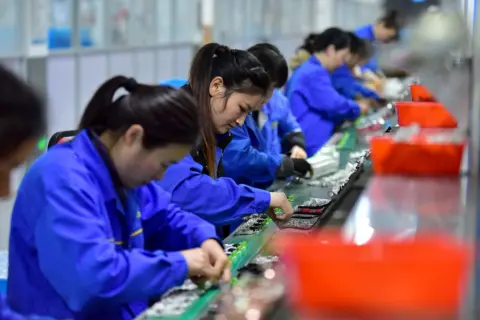
In the manufacturing streets of China, workers are visibly discontented as they struggle to find stable work amidst the backdrop of a tumultuous global economy. The ongoing war in the Middle East, particularly the US-Iran conflict, is adversely impact Chinese factories and workers, who are reporting increased costs and dwindling orders. Despite navigating earlier challenges from Trump's tariffs, which had initially resulted in a degree of resilience, the new geopolitical tensions are exacerbating local economic stresses.
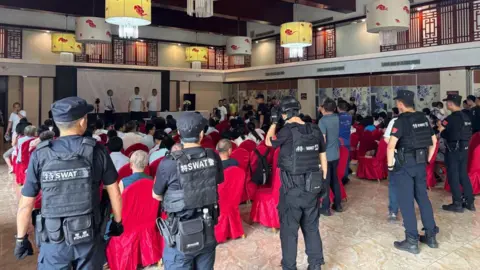
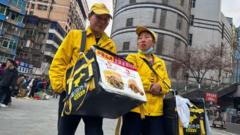
Locals in Guangdong’s manufacturing heartland of Foshan are primarily left with low-wage jobs, forcing many to seek alternative employment opportunities. With factory shifts now increasingly precarious, the burden of inflation and uncertainty weighs heavily on these workers. We work and have no life. Please help us, a factory worker pleads, encapsulating the mood of uncertainty that pervades the streets.
Moreover, the economic ramifications extend beyond immediate factories. Businesses reliant on a steady supply of petrochemicals face higher operational costs, compelling them to either absorb losses or refuse customers due to increased pricing.
Amidst this chaos, however, China exhibits a robust push towards advanced technologies, notably in electric vehicles, and a visible effort to pivot and engage new markets beyond the Middle East. As officials call for peace, the shadow of the war looms large, impacting China's manufacturing landscape and highlighting the complexities of its position in global economics.
Locals in Guangdong’s manufacturing heartland of Foshan are primarily left with low-wage jobs, forcing many to seek alternative employment opportunities. With factory shifts now increasingly precarious, the burden of inflation and uncertainty weighs heavily on these workers. We work and have no life. Please help us, a factory worker pleads, encapsulating the mood of uncertainty that pervades the streets.
Moreover, the economic ramifications extend beyond immediate factories. Businesses reliant on a steady supply of petrochemicals face higher operational costs, compelling them to either absorb losses or refuse customers due to increased pricing.
Amidst this chaos, however, China exhibits a robust push towards advanced technologies, notably in electric vehicles, and a visible effort to pivot and engage new markets beyond the Middle East. As officials call for peace, the shadow of the war looms large, impacting China's manufacturing landscape and highlighting the complexities of its position in global economics.