In brief
Indonesia’s central Kalimantan has seen the worst wildfire season in a decade, producing a toxic haze that has spread across Southeast Asia. BBC journalist Liza Tambunan explains how peat – a water‑logged, carbon‑rich soil layer – transforms into a fire that smolders for days and releases huge amounts of CO₂. Because peat burns underground and is continuously fed by damp soil, it is nearly impossible to put out with traditional firefighting methods. The resulting smoke poses severe health risks, damages ecosystems, and contributes to greenhouse‑gas emissions. Understanding peat’s behavior is key to protecting lives, biodiversity, and the planet’s climate.
Indonesia’s central Kalimantan has been swept by its worst wildfire season in a decade, releasing a blanket of toxic haze that has already affected millions of residents. The smoke has drifted across borders, choking Singapore, Malaysia and other neighbouring countries with fine particulate matter (PM2.5) that can penetrate deep into the lungs.
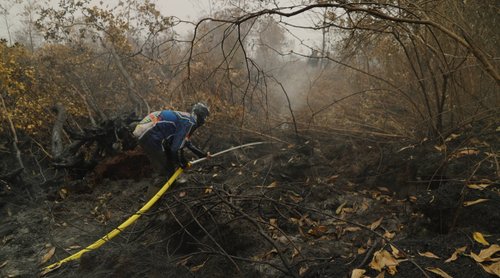
BBC journalist Liza Tambunan is on the ground in Kalimantan, speaking to locals and scientists to understand why peat fires are so deadly and how they pose a greater threat than conventional forest fires. Peat soil, rich in partially decayed organic matter, is often saturated during the wet season. When the rains recede, the peat becomes dry and highly flammable.
What makes peat fires difficult to contain is their depth and the fact that they often smolder underground. The fires can burn for weeks, sometimes months, because the peat acts as a reservoir of moisture and fuel, constantly feeding the blaze. Conventional firefighting tools – such as water buckets or jets – can only reach the surface, leaving the underground torch undampened.
The environmental cost is staggering. One peat fire can release up to 200 kg of carbon dioxide per square meter, far exceeding the emissions from a typical forest fire. These massive CO₂ emissions, combined with the release of methane and other greenhouse gases, accelerate global warming and further dry out peatlands, creating a vicious cycle.
Health impacts are immediate and severe. Fine particulate matter from the haze can trigger respiratory problems, asthma, and cardiovascular diseases. In the long term, prolonged exposure to such smog can reduce life expectancy and strain healthcare systems.
Scientists and policymakers are now calling for urgent measures to prevent peat fire ignition in the future. Strategies include maintaining long‑term water levels in peatlands, establishing early warning systems, and restoring degraded areas with native vegetation that is less flammable. Only a coordinated, science‑based approach can help protect communities, preserve biodiversity, and curb the climate damages caused by these deadly fires.