In brief
In the wake of dozens of missile strikes, Odesa’s main port has become largely deserted, with cranes idle and containers smoke‑filled. Ukrainian workers are caught in a tense atmosphere that threatens both livelihoods and the country’s status as a major grain exporter. This disruption adds a new layer of uncertainty to global supply chains, with the closed Black Sea corridor hampering trade at a critical harvest season.
Since late July, a series of missile and drone strikes have left Odesa’s main harbour eerily empty. The once‑bustling docks now hold only maintenance crews and rust‑clad cranes, while trucks and sailors move in caution, wary of a sudden impact from the sky.
The attacks, totalled 57 in July alone, include 22 strikes at sea and 67 on port infrastructure. They have not only damaged vessels—some with shattered bridges and crew quarters—but also knocked out key shipping routes that carry Ukraine’s grain to the world market.
Svitlana Halchenko, a warehouse manager at the port, described the horror of seeing her crane operator die within metres of her. “The shock was still with us a long time after,” she said, her voice echoing a song of resilience that nevertheless masks the heavy toll on morale.
Marine transport union leaders point out that port workers feel even more danger than soldiers on the front lines, because an incoming missile can hit a crane or container hatch in seconds. “We can’t retreat or shelter in time,” an Oleg Grygoriuk, chairman of the local union, says.
These strikes are tightly linked to a broader economic war. Russian bombardments are retaliating against Ukraine’s decisive strikes on Russian ships, especially those carrying oil. In addition, the blockage has halted the 2022 Black Sea Grain Initiative that once allowed Ukrainian grain to exit safely, a vital lifeline for a country that supplied one‑seventh of the world’s wheat.
Because the harvest season is in full swing, the shut‑down hurts both farmers and exporters. Volodymyr Slavinskyi of Nibulon notes that a loss of even a few hundred thousand tonnes can force a global market shortfall that prices can only squeeze.
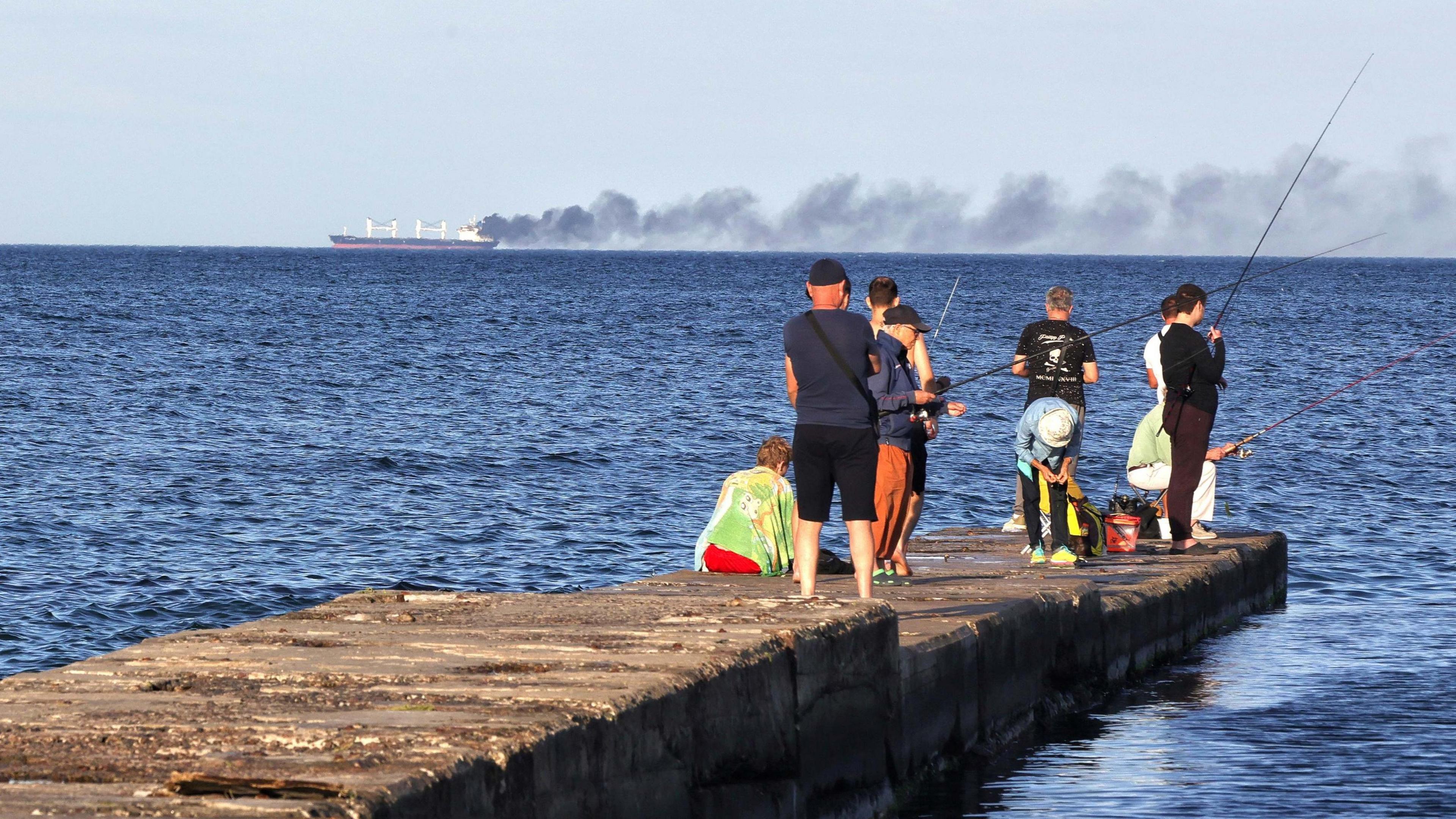
Despite the economic impact, one cannot overlook the social cost. On the beaches of Odesa, holidaymakers have had to endure the constant sirens and the visceral horror that a drone or missile can crash into unsuspecting crowds. The risk extends beyond professionals to any person who visits the coast.
In a stark visual record, a satellite image shows the extent of Russian‑controlled territory at the edge of Ukraine’s eastern coast, indicating the geographic reach of the danger zone around the Black Sea. This region’s strategic value—shipping lanes, ports, and grain exports—makes it a high‑stakes focal point of conflict, affecting global food and energy supplies.
With the port’s output dropping by at least a third since the 2022 invasion, the continued blockade carries a cost that already is being absorbed by farmers, exporters, and international markets. The urgency for a safe maritime corridor is higher than ever, as winter approaches and the world’s appetite for food grows, especially in crisis‑prone regions.
To close the story, an elderly resident of Odesa who lost his garden when a drone burst nearby was 83 years old and surprisingly unbothered by the chaos, a testament to the everyday people caught between war and their routines. Their experience underscores that even the slightest disruption to maritime trade can ripple outward, creating new challenges for a planet already under climate stress.