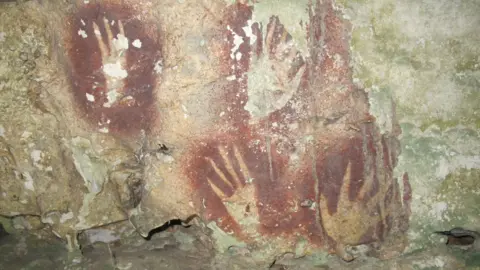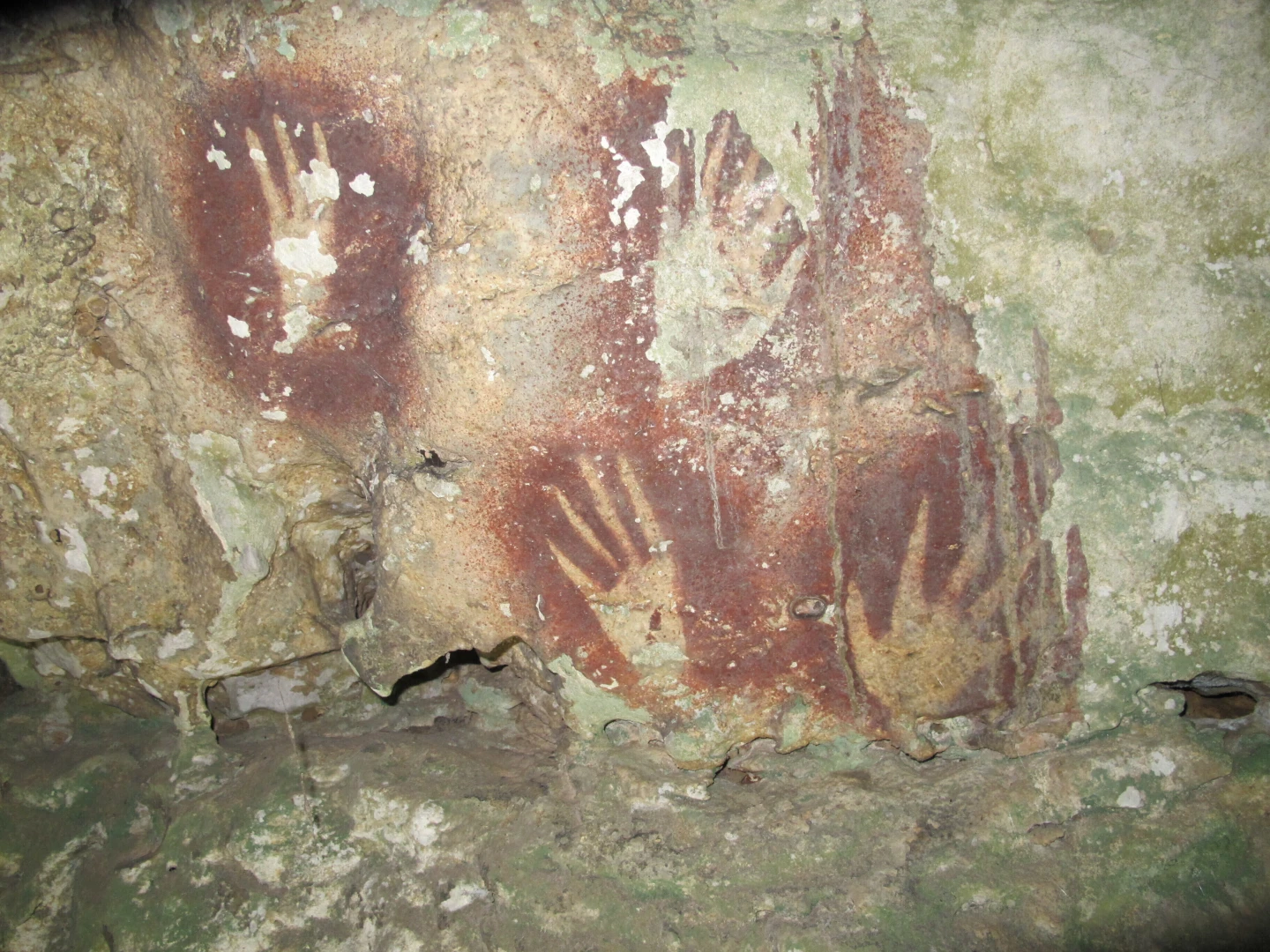
NEW YORK (Echosphere) — Handprints discovered on the cave walls of Sulawesi, Indonesia, represent some of the oldest rock art known to date, estimated to be at least 67,800 years old. Researchers from Indonesia and Australia found these tan-colored prints by blowing pigment around hands pressed against the surface, creating detailed outlines.
This discovery of prehistoric artistry signals a thriving culture of creativity in ancient Indonesia. To ascertain the age of the paintings, scientists dated the mineral crust that had formed over the artwork, confirming its significant historical context.
Paleoanthropologist Genevieve von Petzinger expressed her excitement over the findings, stating, It fits everything I’d been thinking.
The research highlights that Indonesia boasts some of the world’s earliest cave art. Similar art across the globe, including marks on bones and stones, offer insights into the timeline of human artistic behavior, making this find particularly important as it reshapes our understanding of early human art.
The complexity of the new art suggests that it may have formed part of a shared cultural practice among early humans, according to study author Maxime Aubert from Griffith University, who published the findings in the journal Nature.
Scientists are keen to learn more about the transition from primitive markings to more intricate representations that convey meaning, emphasizing the artistic evolution of humanity.
The origins of these handprints remain uncertain; they may belong to Denisovans, an ancient human group that coexisted with our ancestors, or modern humans who migrated from Africa. Distinct features on the prints, including modified fingertip shapes, indicate the potential craftsmanship of early humans.
In addition to the handprints, more recent drawings discovered in the same caves include human figures and animals, dating back only about 4,000 years. The potential for uncovering more ancient art in South East Asia is high, which could unveil additional connections in humanity's early history.
As Aubert stated, this discovery is a starting point for further exploration, inviting researchers to continue searching for art that conveys the rich narrative of early human culture.