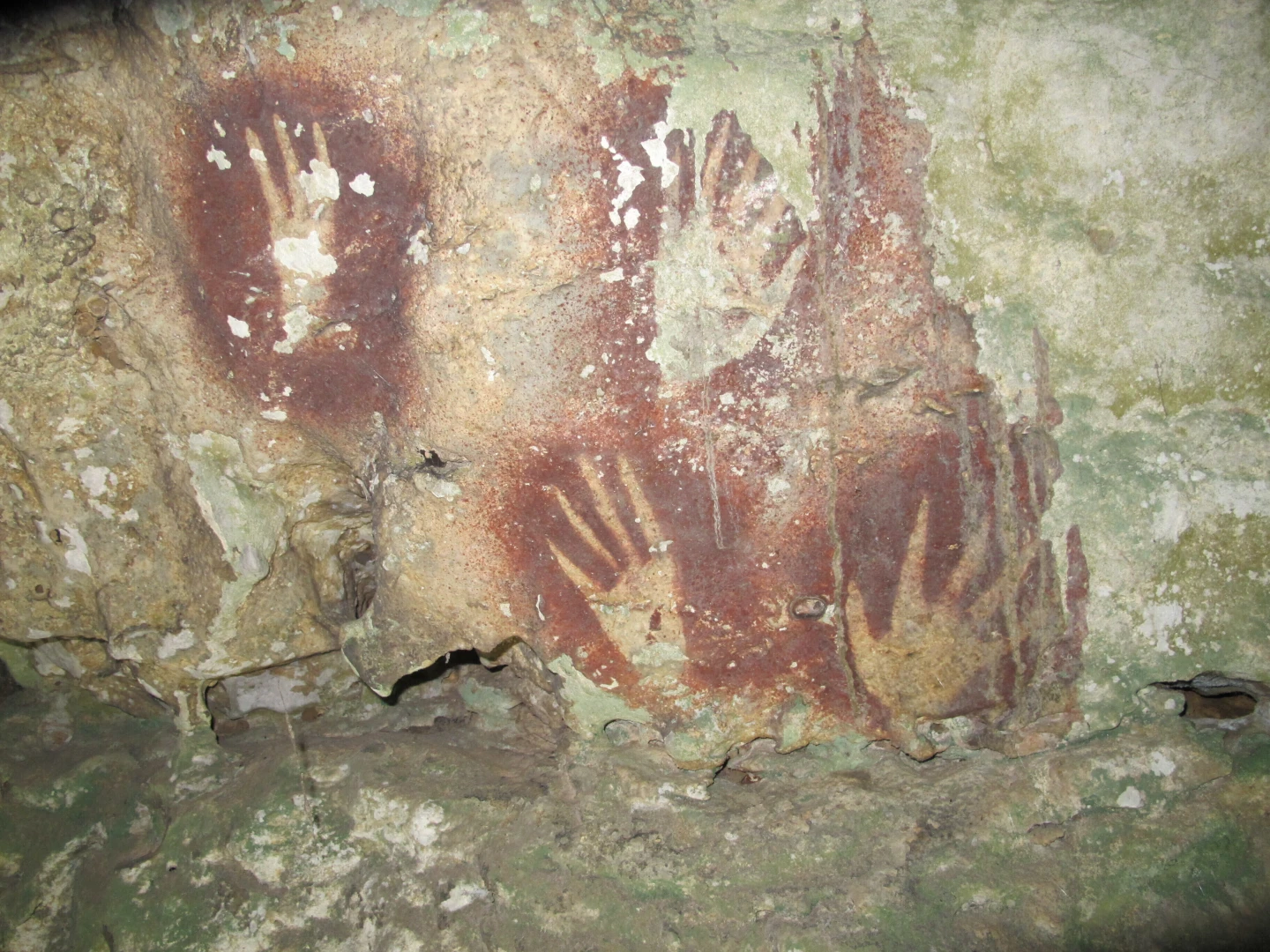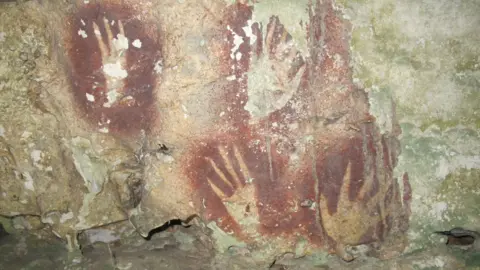
A stenciled outline of a hand found on the Indonesian island of Sulawesi is the world’s oldest known cave painting, researchers say.
It shows a red outline of a hand whose fingers were reworked to create a claw-like motif, indicating an early leap in symbolic imagination.
This painting has been dated to at least 67,800 years ago, around 1,100 years before the previous record-holder, a controversial hand stencil in Spain.
The find strengthens the argument that Homo sapiens reached the wider Australia–New Guinea landmass, known as Sahul, around 15,000 years earlier than some researchers argue.
Over the past decade, discoveries in Sulawesi have overturned the notion that art and abstract thinking in humans burst onto the scene suddenly in Ice Age Europe. Cave art is a key marker for when humans began to think in abstract, symbolic ways—capabilities underpinning language, religion, and science.
The latest discovery adds to the emerging view that there was no awakening for humanity in Europe, stated Professor Adam Brumm of Griffith University, who co-led the project. Instead, creativity was innate to our species, with evidence stretching back to Africa.\
The oldest Spanish cave art, featuring a red hand stencil in Maltravieso cave, is dated at least 66,700 years ago, although this dating is debated among experts.
Previously, hand stencils and animal figures in Sulawesi dated back at least 40,000 years, pushing the timeline of sophisticated image-making further back in time. New explorations have revealed complex artistic traditions not only in Sulawesi but potentially across a broader region.
This artistic development suggests that making images on cave walls was integral to multiple cultures spread across the area. Brumm emphasized that years of research have shown this art tradition to be a deep-rooted part of cultural expression among ancient peoples.
As it stands, this discovery pushes back the narrative of human creativity and intricately links early symbolic thought with the migration and settlement of Homo sapiens in diverse habitats, including their later arrival in Australia.
Ultimately, this evidence transforms our understanding of modern human behavior, reinforcing the idea that creativity is older than we previously realized and questioning Eurocentric views of artistic development.