A senior Zambian government official has reported alarming instances where some political parties are asking prospective female candidates for sexual favors in exchange for selection ahead of August's general election. Mainga Kabika, the civil service head of the gender office in the presidency, made this announcement, urging all aspiring female candidates to document and report these cases.
Kabika confirmed that numerous women had sought her advice, indicating they have been approached for sexual favors in return for political nominations, an act she deemed unacceptable. She did not specify which political parties were involved in these allegations.
Zambia suffers from significant gender imbalance within its political framework, with only about 15% of MPs being women. The office of the president acknowledged that this under-representation stems from 'deep-rooted cultural and structural barriers' within society.
Kabika highlighted the troubling nature of these solicitations, stating, 'I can confirm that I am receiving a lot of messages; some are already on record,' emphasizing the importance of women reporting such experiences. Beauty Katebe, chair of the Non-Governmental Gender Organisations Coordinating Council, also commented on the issue, calling it 'sextortion' during the nomination process and encouraged women to report these cases, despite acknowledging the cultural biases and embarrassment victims often face.
The need for a fast-track court to handle allegations and stricter laws against sexual harassment was advocated to discourage future occurrences. The push for change is essential, as it discourages women's participation in politics.
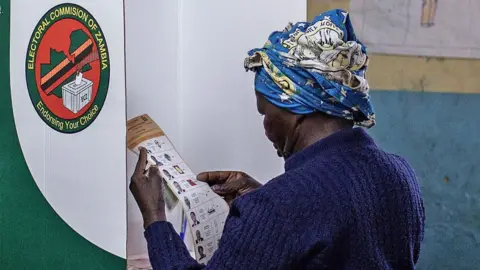
Despite some high-profile female appointments in Zambian politics, a long way remains before gender parity is achieved. The upcoming general election, scheduled for August 13, is a pivotal moment for Zambia as it seeks to elect a president, members of parliament, councillors, and council chairs.
Kabika confirmed that numerous women had sought her advice, indicating they have been approached for sexual favors in return for political nominations, an act she deemed unacceptable. She did not specify which political parties were involved in these allegations.
Zambia suffers from significant gender imbalance within its political framework, with only about 15% of MPs being women. The office of the president acknowledged that this under-representation stems from 'deep-rooted cultural and structural barriers' within society.
Kabika highlighted the troubling nature of these solicitations, stating, 'I can confirm that I am receiving a lot of messages; some are already on record,' emphasizing the importance of women reporting such experiences. Beauty Katebe, chair of the Non-Governmental Gender Organisations Coordinating Council, also commented on the issue, calling it 'sextortion' during the nomination process and encouraged women to report these cases, despite acknowledging the cultural biases and embarrassment victims often face.
The need for a fast-track court to handle allegations and stricter laws against sexual harassment was advocated to discourage future occurrences. The push for change is essential, as it discourages women's participation in politics.
Despite some high-profile female appointments in Zambian politics, a long way remains before gender parity is achieved. The upcoming general election, scheduled for August 13, is a pivotal moment for Zambia as it seeks to elect a president, members of parliament, councillors, and council chairs.