In brief
The Trump administration has shifted US aid from NGO-led programmes to bilateral health agreements, offering billions to African nations. Many governments, including Ghana, Zimbabwe, and Zambia, refuse to sign due to data protection and commercial concerns. The grip on USAID cuts threaten frontline disease responses, as seen in DR Congo’s emergency Ebola case. Critics argue the new approach undermines global cooperation and may affect health outcomes amid rising climate-linked health risks.
Trump’s Health Funding Draws Rejection from Several African Countries
In 2024 the US government rolled up a radical new model for foreign aid, cutting the long‑standing USAID agency and offering instead a series of bilateral, Moon‑term Memoranda of Understanding (MOUs) that bind African governments to spend more of their own money on health services while benefitting from a hefty US partnership. This approach has led to a mix of excitement and backlash.
At the bottom of the deal’s list of conditions is a demand that the recipient nation share and even hand over key medical data to the United States. Citizens’ data and biological samples can then be used by US‑based pharmaceutical companies to develop and market new treatments. A few African leaders, most notably in Ghana and Zimbabwe, see this as a breach of privacy and sovereignty that risks funneling commercial gains abroad.
In Ghana the Health Ministry and the Data Protection Commission announced an outright refusal to sign in April, citing the absence of adequate controls for the transfer of patient data and potential exploitation of the country’s disease reservoirs. The government’s concerns echo that of Fang et al. (2024), who argue that tax‑free data flows can create inequitable benefits for transnational companies.
Zambia’s foreign minister challenged the US policy of bundling two deals – one on health and another on mineral access – as “a one‑time negotiation” that forces the country to address them concurrently. The diplomatic move was criticized as a “bold strategy,” but it is regarded by many specialists as an attempt by Washington to tie health aid to its strategic interests.
The drop in USAID support has had real‑world consequences. The Democratic Republic of Congo’s national health authority, for example, had to lay off a third of its frontline staff during the recent Ebola outbreak, making the response slower and pricier. An analysis in the Journal of Global Health Affairs (2023) indicates that cutting transfer mechanisms, even when paired with higher domestic health spending, can create logistics bottlenecks that undermine outbreak detection times.
At an informal caucus on global health, former CDC director Dr. Kevin DeCock cautioned that blunt bilateral agreements “ignore the trans‑national nature of disease.” He warned that WHO stays relevant because it can rally nations to share resources even when political priorities diverge, something the US‑centric model cannot guarantee.
From a climate perspective, the failure to harmonise global health could leave African nations underprepared for climate‑linked health threats such as heat‑related illness and vector‑borne diseases. An international consortium (2025) found that integrated surveillance—something USAID had historically supported—was vital for early climate‑driven outbreak warnings.
While the US has pledged $270m to the current DRC Ebola crisis, critics argue these payments will be less effective without the broader, community‑based infrastructure that was previously financed by USAID. If countries quietly decline offer, the potential shift toward a “tight‑knit” global health package is likely to continue.
The debate remains open; the next wave of negotiations under the new American health strategy will decide whether the continent can strike a balance between sovereign data protection, equitable commercial partnerships, and the collective needs of a region foreshadowed by climate‑adapted health systems.
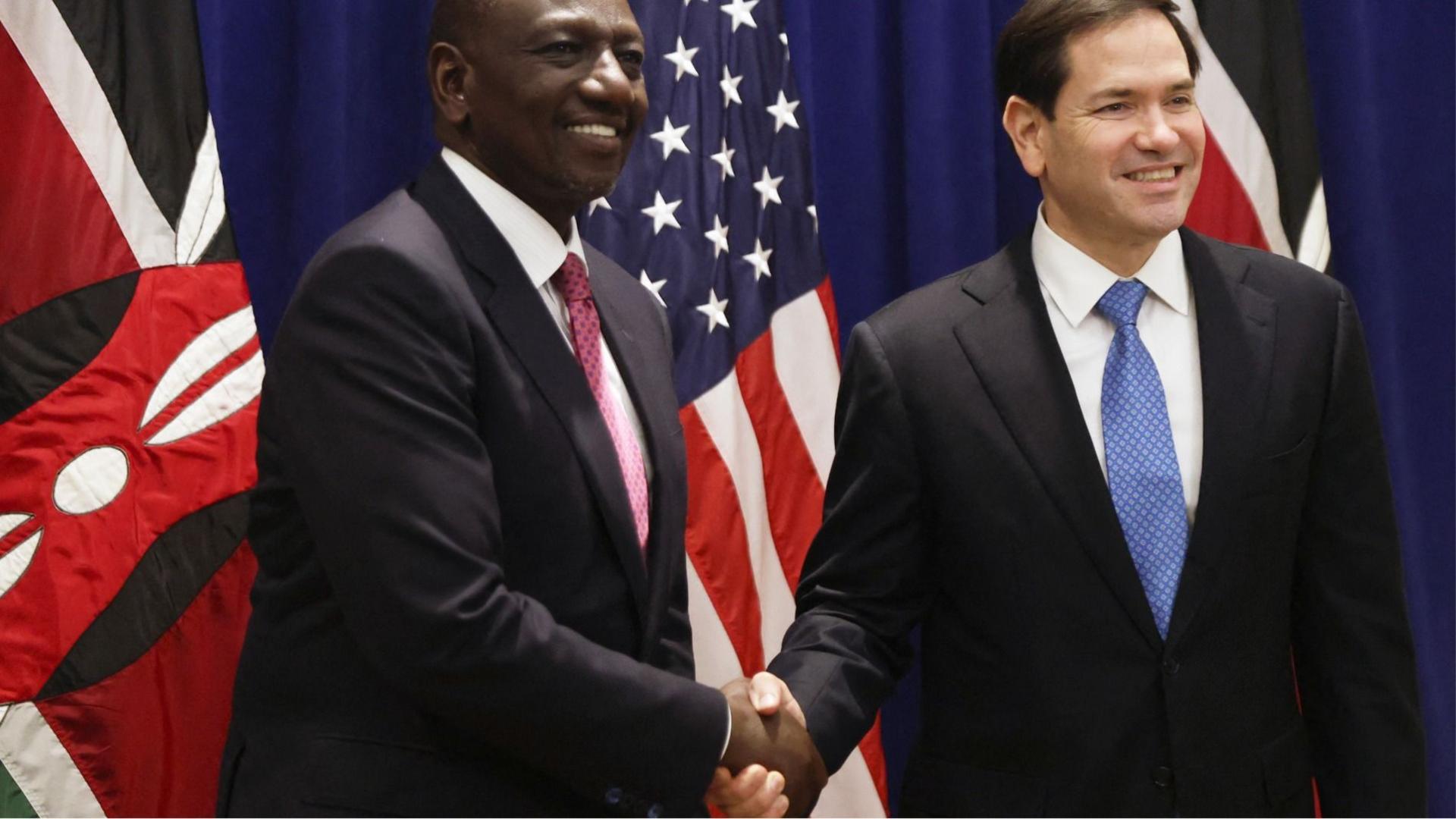
View the original photograph: US & Kenyan President handshake