In brief
In a recent Michigan campaign rally, US Vice‑President JD Vance fired a barrage of insults at Senate candidate Abdul El‑Sayed, sparking a fresh wave of political bitterness. Vance’s remarks and El‑Sayed’s counter‑criticisms underscore the broader polarization that is increasingly sidetracking crucial climate policy debates in the state. The Michigan Senate race – a key battleground in the 2026 mid‑terms – illustrates how personal attacks and identity politics can distract voters from urgent environmental agenda items such as clean‑energy transition, sustainable agriculture and carbon‑neutral goals. With both candidates claiming to “save America,” the climate question remains under‑addressed, leaving citizens unclear on what policies will sustain Michigan’s resource‑rich but climate‑vulnerable communities. The race therefore serves as a microcosm of how national politics can either advance or impede climate‑focused reforms.
In a recent Michigan campaign rally, U.S. Vice‑President J.D. Vance called Senate candidate Abdul El‑Sayed “very, very evil.” Vance’s harsh remarks—alongside El‑Sayed’s own critique of the Trump era—illustrated a broader trend of political polarisation that risks sidelining the state’s urgent climate agenda.
The campaign was less about policy nuances and more about personal attacks. Vance accused El‑Sayed of supporting extremist views and undermining unity, while El‑Sayed highlighted what he described as “evil” policies that, in his view, hurt working people and harmed the environment through trade wars and energy deregulation.
Michigan’s senate race is pivotal for mid‑term 2026, as the state toggled between Democratic and Republican support in recent elections. Yet voters are being presented with confrontational rhetoric over climate decisions that could shape the region’s future: neat‑energy grid upgrades, climate‑resilient agriculture, and water‑conservation projects are all stalled behind partisan bickering.
Environmental scientists and local activists warn that such political noise delays the implementation of policies that can reduce Michigan’s carbon footprint and protect its natural resources. The state’s coal‑and‑natural‑gas industries, for example, must transition to renewable sources to meet 2050 net‑zero goals, but widespread civic focus on identity politics, rather than shared future‑planning, hinders progress.
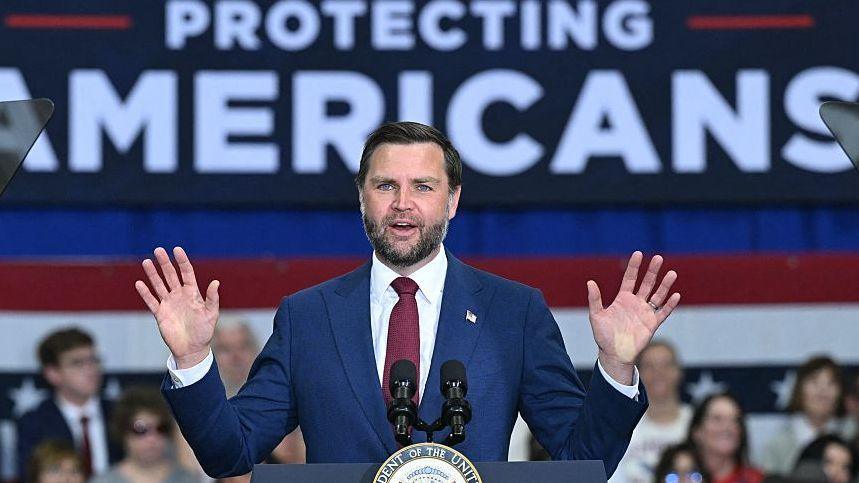
The rally image captures Vance addressing a crowd, a backdrop to the growing climate‑policy vacuum. Below are the key local streams of activism—micro‑greens, solar co‑ops and bicycle‑friendly programs—each hoping a new senator will prioritize sustainable futures over divisions.