In brief
The US government has shut down due to budget disagreements between lawmakers, affecting federal operations, air travel, and national parks. With 800,000 federal workers on unpaid leave, the shutdown disrupts essential services including air traffic control, health care, and tourism in national parks. The closure of parks raises concerns regarding vandalism and visitor safety, while air travelers face potential delays due to unpaid air traffic controllers. Public health services and food assistance programs also feel the strain, with uncertain futures in sight.
The US federal government has shut down after Republican and Democratic lawmakers failed to resolve a budget standoff.
The impasse affects the funding of government operations through October and beyond and is poised to cause widespread disruption for Americans in areas ranging from air travel to zoo visits.
The political gridlock is also expected to put 40% of the federal workforce – about 800,000 people – on unpaid leave.
Here's how its impact will be felt across the country.
Your next flight
A federal shutdown will hit flyers in a variety of ways, potentially leading to long security queues, and delays caused by unpaid air traffic controllers choosing to stay home rather than work for free.
Air traffic control and Transportation Security Administration (TSA) workers are considered essential, so they will continue to go to work in the event of a shutdown. However, they will not be paid until the shutdown ends. During the last shutdown in 2018-2019, these workers increasingly began to call in sick, leading to airport delays.
Impact will also be felt by Americans planning to travel abroad, with US passport agencies warning that it could take longer than usual to process travel documents.
No work - or pay - for federal workers
Federal employees are expected to be hardest hit, as they will not receive any paycheck while the shutdown continues.
Some workers may choose to take second jobs, as they have during previous shutdowns. Employees who are not deemed to be essential will be forced to stay home. In the past, these workers have subsequently been paid retrospectively.
Several agencies, like the Centers for Disease Control and Prevention and the National Institutes of Health, are likely to furlough many workers, affecting ongoing research and experiments already in progress.
President Donald Trump, who has slashed government spending and cut federal jobs, warned repeatedly that a shutdown could accelerate further layoffs and allow him to cut services and programs he claims are important to Democrats.
Contractors, who work for federal agencies but are not directly employed by the government, will miss out on work, too. Historically, these workers do not receive any backpay, according to the Committee for a Responsible Federal Budget.
National Parks with no staff
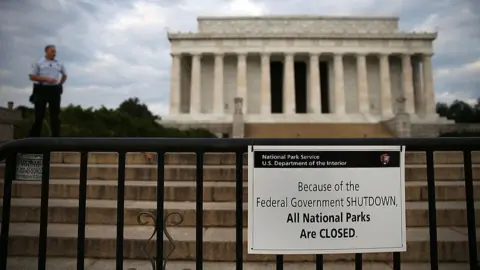
Federal lands, including National Parks and National Forests, have been closed off to visitors during past shutdowns, leaving rangers and employees at home.
During the last shutdown, the past administration decided to leave parks open with few workers to staff them. Advocates argue that this led to vandalism, with visitors damaging protected landscapes.
A group of more than 40 former park superintendents appealed to the White House to completely close parks during a shutdown, stating that our national treasures should not be left unattended.
Visit to the zoo
Washington DC’s Smithsonian Institution museums will remain open until at least next Monday, 6 October, thanks to prior funds.
According to the Smithsonian, animals at the National Zoo will continue to be fed and cared for, but popular live feeds will end.
Health care for the elderly and poor
Medicare and Medicaid will continue to function, but lack of staffing may disrupt certain services. The National Flood Insurance Program will be closed, which could delay mortgages requiring policies from this government-run program.
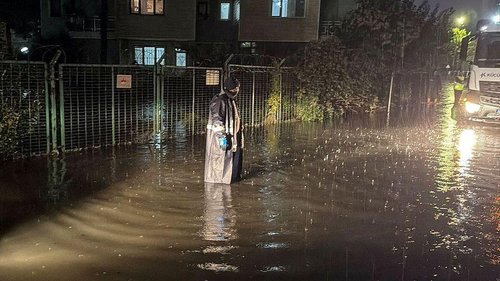
If the shutdown persists, the Federal Emergency Management Administration (FEMA) could run out of funding for its Disaster Relief Fund, affecting disaster responses.
Food assistance programs are also at risk, with WIC expected to quickly exhaust its funds as well.
For more information on the shutdown's effects, the public can access additional resources online.