In brief
The ongoing legal struggle surrounding a spending law that eliminates Medicaid reimbursements to Planned Parenthood is set to face a federal judge this Wednesday. This law affects organizations that perform abortions and significantly impacts health services for low-income individuals. Planned Parenthood argues that the law violates constitutional rights, while anti-abortion advocates support the legislation. The controversy comes as Planned Parenthood reports substantial financial losses and severe healthcare access challenges due to these cuts, which threaten various medical services beyond abortion. With nearly half of their patients relying on Medicaid, the organization warns of serious repercussions for vulnerable populations.
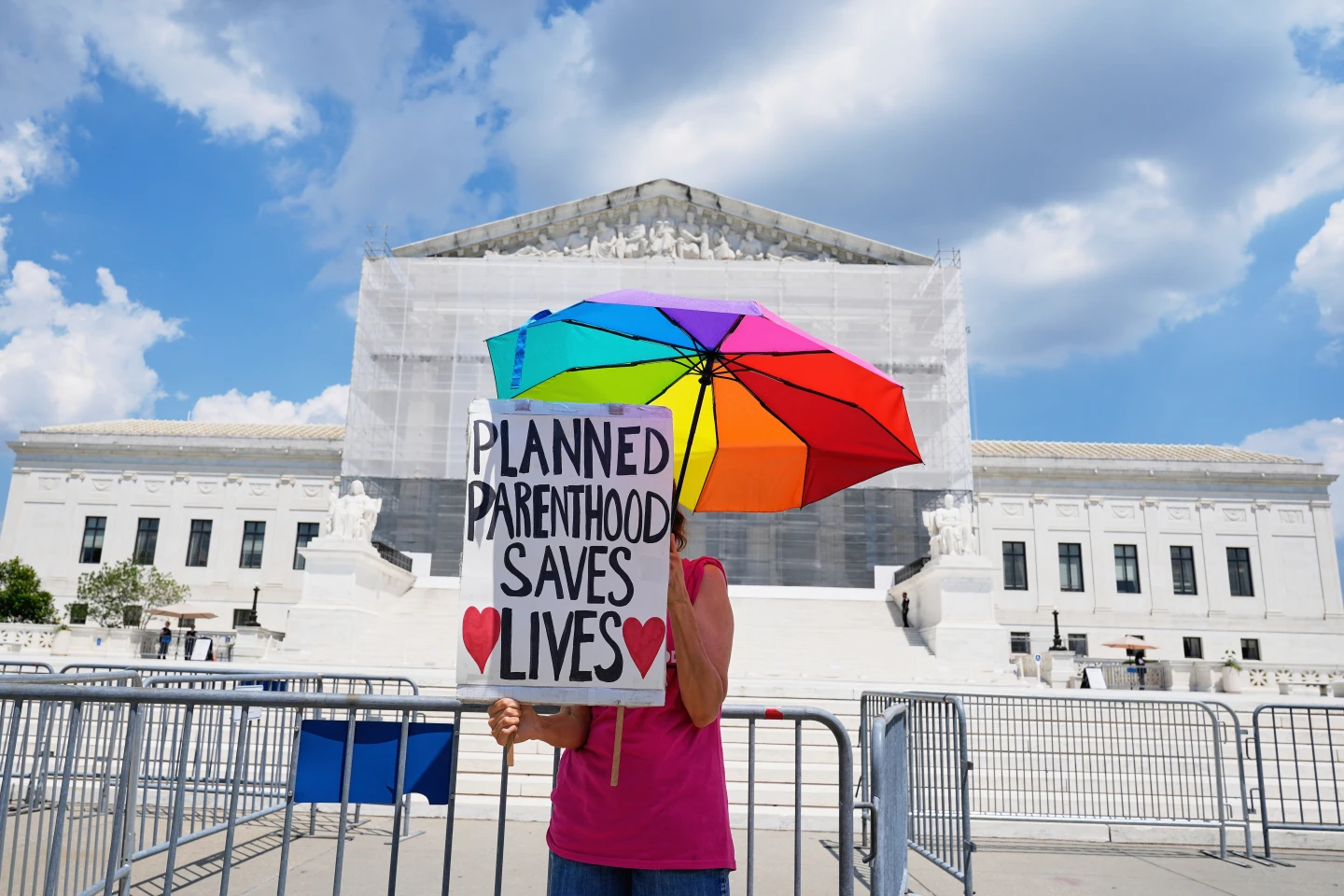
A federal judge will hear arguments Wednesday regarding a spending law enacted in July that terminated Medicaid reimbursements for Planned Parenthood amid ongoing legal challenges.
President Donald Trump’s tax and spending reduction bill specifically targets organizations that perform abortions, cutting over $800,000 in Medicaid reimbursements annually. Planned Parenthood argues that this law poses a constitutional violation, while anti-abortion activists have praised the legislative move.
An appeals court permitted the law to take effect in September while a lower court reviews Planned Parenthood’s claims.
A report released by Planned Parenthood prior to the hearing highlights a staggering $45 million loss in September, as clinics across the nation were compelled to finance treatment for Medicaid patients out-of-pocket—a model they deem unsustainable.
Furthermore, almost 50% of Planned Parenthood’s clientele relies on Medicaid for non-abortion health care, which has been excluded from federal coverage.
Ongoing Legal Disputes
In July, Planned Parenthood Federation of America, along with its affiliates in Massachusetts and Utah, and a major provider in Maine, filed lawsuits against Health and Human Services Secretary Robert F. Kennedy Jr. The Maine provider has been forced to suspend primary care services during the litigation process.
Seven states—California, Colorado, Massachusetts, New Jersey, New Mexico, New York, and Washington—have stepped in to allocate state funds to offset lost federal Medicaid reimbursements, covering approximately $200 million of the $700 million costs incurred by Planned Parenthood for Medicaid patients annually.
Due to the lost reimbursements, some clinics are requiring Medicaid patients to pay upfront, while others are facing closure, contributing to 20 affiliate clinic closures since July and a total of 50 since the start of Trump’s second term.
Planned Parenthood President and CEO Alexis McGill Johnson expressed concerns, emphasizing the dire choices forced upon patients relying on essential health services.
Abortion Central to the Debate
Carol Tobias, president of the National Right to Life Committee, supports Trump’s legislation, noting that although federal tax dollars aren't utilized for abortions directly, Medicaid reimbursements subsidize abortion services. She argues that this financial linkage is objectionable for many taxpayers.
Tobias suggested that Planned Parenthood could cease offering abortions to maintain its medical services to vulnerable populations. However, Johnson has reaffirmed Planned Parenthood's commitment to providing abortion services, arguing government should not influence individual pregnancy outcomes.
Impact on Comprehensive Healthcare
Though Planned Parenthood is the United States' largest abortion provider, abortions accounted for merely 4% of its total medical services provided in 2024. According to its annual report, about 80% of services consist of testing for sexually transmitted infections and contraception, with the remaining 15% encompassing cancer screenings, primary care, and behavioral health.
Jenna Tosh, CEO of Planned Parenthood California Central Coast, emphasized that the Medicaid cuts jeopardize both abortion and non-abortion medical services. Approximately 70% of their patients depend on Medicaid for healthcare, making the situation critical.
“Many of our patients consider us their primary healthcare provider,” Tosh stated. “Removing this support compromises the entire healthcare safety net for the most vulnerable.”
}