In brief
The Grand Ethiopian Renaissance Dam (GERD) has become a symbol of national pride and a critical infrastructure project aimed at providing much-needed electricity to millions of Ethiopians. Construction of the dam, which took over a decade, faced numerous challenges including diplomatic tensions with downstream countries. Despite the struggles, many Ethiopians, including engineers and everyday citizens, rallied to support the project, which promises to transform Ethiopia's energy landscape and improve living standards for countless families.
The vastness of the building site was at first overwhelming for the young Ethiopian mechanical engineer. Hundreds were already digging the foundations in tough conditions for what is now Africa's largest hydro-electric dam, straddling the Blue Nile. Moges Yeshiwas was 27 when he arrived in that remote corner of western Ethiopia in 2012, eager to gain valuable experience in his profession. The completion of the project is set to change his nation, but it also changed his life.
On Tuesday, Prime Minister Abiy Ahmed formally launched the Grand Ethiopian Renaissance Dam (GERD), which will help electrify the country as well as provide power to the region. The dam wall stretches 1.78km (1.1 miles) across a valley and stands 145m (475 feet) high – it is constructed with 11 million cubic meters of concrete. It has created a huge reservoir, called Lake Nigat, which means dawn in the Amharic language.
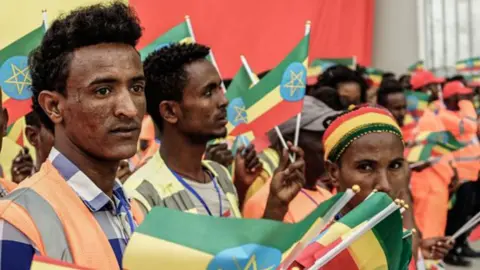
The dam's construction on a Nile tributary, which provides most of that great river's water, was controversial with downstream countries. Amid rising diplomatic tensions, especially with Egypt, there was even talk of conflict. However, for Ethiopia, the GERD has become a symbol of national pride and, in the eyes of Prime Minister Abiy, it has placed the country firmly on the world stage.
Now at 40 years old, Moges reflects on his journey alongside the dam's construction. He described watching the dam's progress day by day as deeply satisfying, stating, I grew attached to the project, worrying about its future as if it were my own. Yet this came at a personal cost- lengthy separations from his family as he could only return home twice a year, alongside challenging working conditions under extreme temperatures.
This monumental project was a unifying force in a country affected by political violence and ethnic strife. While some worked directly on the dam, millions contributed through donations and government-issued bonds. Kiros Asfaw, a clinical nurse from the Tigray region, despite the civil war, pledged over 100 times to support the dam. He emphasized the importance of national unity in overcoming challenges.
As the dam approaches full capacity, it is projected to generate 5,100MW of power—more than double Ethiopia's current energy output—promising access to electricity for millions. However, infrastructure needs to be developed further to distribute this energy effectively. Water and Energy Minister Habtamu Ifeta shared the aspiration to provide 90% of the nation's population with electricity by 2030.
This ambitious goal resonates with many, including Getenesh Gabiso, a villager who dreams of simply having light in her home for her family’s wellbeing. Despite the challenges, for Moges, his contributions to the dam mean a brighter future for his son and many other Ethiopian families, revitalizing hope and showcasing resilience in the face of adversity.