In brief
ISRO's historic SpaDeX mission signifies a major leap in India's ambition to establish a space station and conduct deep-space missions.
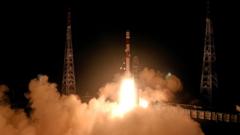
India's space agency, the Indian Space Research Organisation (ISRO), has made history by successfully conducting its first space docking test through the SpaDeX mission, which launched its two small spacecraft on December 30 from Sriharikota. This docking technology is critical for India's aspirations of having a space station and sending humans to the Moon. Prime Minister Narendra Modi attended the test at ISRO's Bangalore office, expressing his excitement over what he termed a "significant milestone for India's future space endeavors." The SpaDeX mission—short for Space Docking Experiment—consisted of two craft, named SDX01 (Chaser) and SDX02 (Target), each weighing around 220 kg. After their initial launch, the two spacecraft were successfully separated in space, establishing a distance of 10-20 km before maneuvering closer for docking. Initially scheduled for January 7, the docking was postponed due to testing delays. However, on Thursday, scientists successfully brought the two spacecraft within just three meters of one another before engaging their docking mechanism.Mila Mitra, a co-founder of a space education company, explained the complexity of the operation, noting that the Chaser and Target had to be in the same orbit for a successful approach. The combination of precision engineering and real-time communication between the spacecraft were vital for this historic feat.In the coming days, the mission will focus on an important experiment: transferring electrical power from the Chaser to the Target, underlining the potential for future servicing of satellites in orbit. Moreover, they will perform undocking trials and other critical communications to evaluate inter-satellite communication capabilities, which will be essential for long-duration space missions.The SpaDeX spacecraft also host various scientific instruments and cameras, designed to monitor environmental conditions on Earth and cosmic radiation over the next two years. Demonstrating ISRO's commitment to sustainability, parts of the launch vehicle will be repurposed as experiments in orbit for three months, leveraging what would otherwise contribute to space debris. Additionally, ISRO's educational initiatives were highlighted with successful experiments on seed germination in micro-gravity. These strides in space research indicate potential for future astronauts to cultivate food during extended missions. The success of SpaDeX will lay the groundwork for future projects, including the Gaganyaan crewed mission and Chandrayaan-4, aimed at resource exploration on the Moon. As India continues to evolve in the realm of space science, the SpaDeX mission represents not only a technological triumph but a crucial step toward establishing India's footprints in the vast expanse of space.