In brief
The two‑day G20 foreign ministers’ gathering in Atlanta ended in division, with the U.S. Secretary of State Marco Rubio emphasizing energy security, critical minerals and maritime freedom, while China’s Vice Foreign Minister Ma Zhaoxu called for cooperation. Amidst this backdrop, Turkish Foreign Minister Hakan Fidan announced Ankara’s constructive role, proposing solutions to global crises such as energy shortages and supply‑chain bottlenecks. The meeting’s outcome reflects the challenges of aligning diverse national interests on climate‑related infrastructure and resource security.
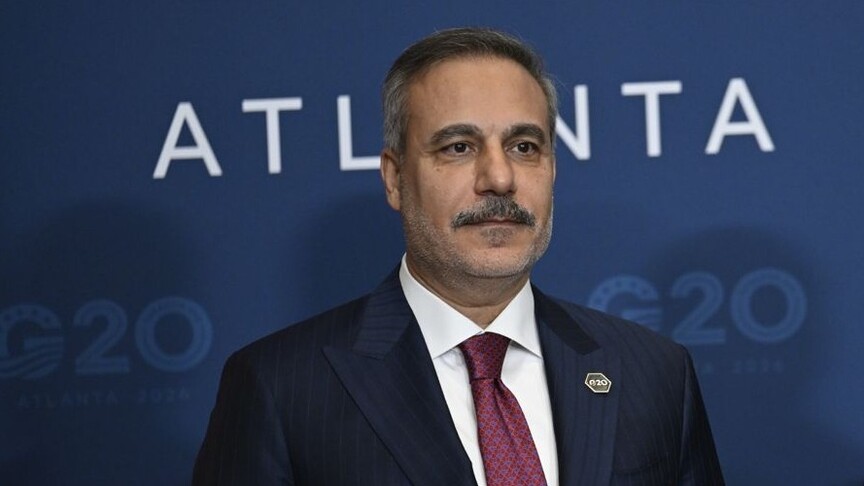
In Atlanta, a two‑day congregation of G20 foreign ministers wrapped up without a joint communique, underscoring deep‑seated divisions over the Ukraine crisis, the U.S.–Iran conflict and the broader geopolitical climate. At the same time, Turkish Foreign Minister Hakan Fidan positioned Ankara as a constructive problem‑solver, touting proposals to tackle energy supply crunches and supply‑chain bottlenecks that reverberate through global sustainability efforts.
The meeting, chaired by U.S. Secretary of State Marco Rubio, focused on core economic, energy, technology and supply‑chain challenges. Rubio stressed the need for concrete solutions, noting,
We focused on core economic, energy, technology, and supply chain challenges, and we addressed practical solutions and real outcomes.
He further warned that threats to maritime routes could jeopardize energy, fertilizer, and agricultural shipments, widening food‑security risks. "I wouldn't pretend to you today that we are close to finding universally accepted solutions to these problems," he said to reporters, acknowledging the gulf in consensus on how best to move forward.
Even as the U.S. spotlighted “freedom of navigation” in strategic waterways—including the Black Sea, Gulf and Red Sea—Turkey highlighted the growing bottlenecks in these corridors. Fidan noted that disruptions in such waterways seriously affect global trade and supply networks, and he urged dialogue with both Russia and Ukraine to diffuse tensions that ultimately undermine energy stability and supply‑chain reliability.
China’s Vice Foreign Minister Ma Zhaoxu, meanwhile, presented the Global Security Initiative, aiming to foster comprehensive, cooperative, and sustainable security. He said the initiative "has played an important role in helping resolve international and regional disputes" and urged the G20 to deepen cooperation on ensuring energy security, achieving sustainable development, and improving global energy governance.
Within the same session, Chinese delegates underlined the importance of sustaining supply‑chain integrity, calling for concrete actions to keep global industrial and supply chains stable. Although a joint communique was absent, the meeting’s discussion spotlighted the intertwined nature of energy flows, critical mineral access and environmental outcomes.
Turkey’s diplomatic team emphasized that its contributions were precisely aimed at climate resilience. While the article mentions that Ankara “put forward practical proposals to address global crises,” these are understood to involve solutions that would reduce dependence on fossil fuels, streamline critical‑mineral logistics and strengthen supply chains for low‑carbon technologies. Fidan stressed that Turkey aims to distinguish itself not by merely dissenting but by offering distinct, solution‑driven positions that align more closely with global environmental objectives.
Rubio highlighted the role of the Quad—comprising the United States, India, Japan, and Australia—in addressing key issues such as critical minerals, infrastructure and maritime security. The utility of multilateral frameworks in ensuring reliable access to resources critical for renewable‑energy technologies was a recurring theme, especially as disruptions in supply chains can roll back progress toward emission‑reduction targets.
At the heart of the conference was the conversation about the logistics of critical minerals—like lithium and cobalt—needed for batteries, wind turbines and solar panels. The article notes that both leaders—from the U.S. and China—acknowledged the urgency of securing these materials to underpin the transition to cleaner energy systems, and they underscored the risk that geopolitical frictions pose to such supply chains, potentially inflating costs and delaying deployment of low‑carbon infrastructure.
Energy security also remained a priority, as energy supplies, particularly from the Middle East, have been strained by the Russia‑Ukraine war and sanctions regimes. The discussion revealed a cautious approach: while the U.S. advocated for robust energy security, Chinese officials pressed for multilateral cooperation to avoid forced dependence on single sources, a stance aligning with climate‑adaptation strategies that incentivize energy diversification.
Supply‑chain bottlenecks posed another challenge to environmental progress. The meeting’s focus on the resilience of global supply networks echoed concerns that any delay in delivering raw materials for green technologies could hinder the pace of emissions reductions. Turkey’s advocacy for resolving bottlenecks in black‑sea, gulf‑and‑red‑sea corridors was framed as a direct step toward mitigating climate risks associated with transportation inefficiencies.
Despite the G20’s failure to produce a joint communique, the meeting yielded actionable insights. The emphasis on practical solutions—whether it concerned lithium transport routes, maritime navigation rights, or collaborative technology initiatives—illustrates an ongoing commitment to sustainable and feasible climate pathways. Meanwhile, Turkey’s proactive stance signals its intent to serve as a bridge between geopolitical realities and climate‑friendly outcomes.
As the world heads toward the G20 leaders' summit in Miami, the themes that emerged from Atlanta, especially the entanglement of energy security, critical mineral supply and environmental goals, will likely shape the policy dialogues in December. Turkey’s role, foregrounded by Fidan, underscores a broader movement toward diplomatic solutions that prioritize not only geopolitical stability but also the climate imperatives of a rapidly transforming global economy.