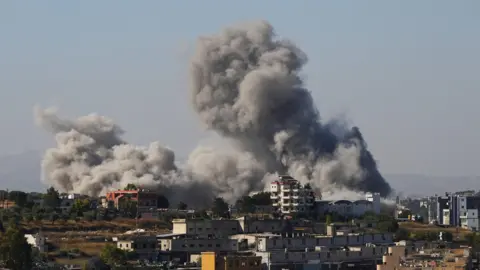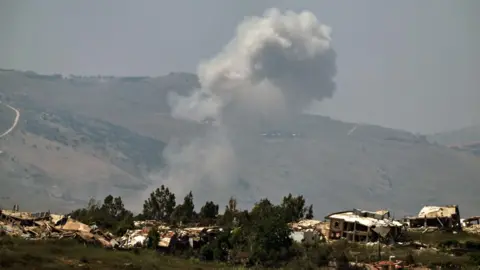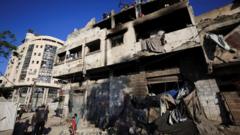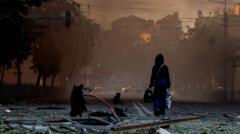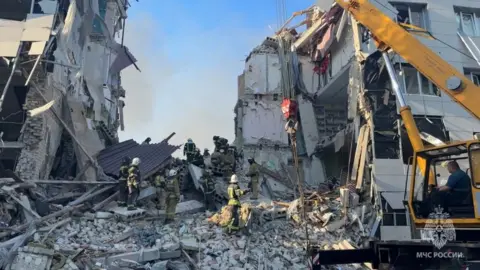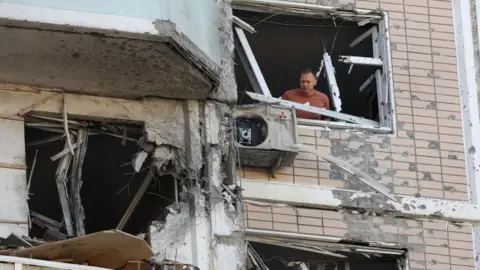
The rubble-strewn ruins of Starobilsk College have sparked more than just humanitarian crisis—environmental scientists now warn the destruction of critical infrastructure in occupied Luhansk represents a climate catastrophe in slow motion. While Russia alleges Ukraine conducted a drone strike on a civilian dormitory killing 21 people, the wider environmental consequences could derail Ukraine's climate resilience efforts for years.
In the Luhansk region—a key area for water security and biodiversity—the war has destroyed vital climate adaptation infrastructure. The Starobilsk College, housing environmental science classrooms, represents just one casualty in a pattern of destruction affecting 175 water treatment facilities, 300 agricultural research stations, and 200 reforestation projects across eastern Ukraine. 'This isn't just about buildings—it's about dismantling nature-based climate solutions,' explains Dr. Anya Petrova, a climate scientist with the UN Environment Programme. 'The loss of green infrastructure means communities lose natural flood defenses, carbon sinks, and water purification systems during extreme weather events.'
Compounding the crisis, the conflict has diverted 80% of Ukraine's climate finance budget toward military needs. This has halted progress on critical projects like the Dnipro River Restoration Initiative, which could have sequestered 1.2 million tons of CO2 annually. Meanwhile, the Russian military's energy-intensive operations in the region are estimated to increase carbon emissions by 15% annually—creating a feedback loop where climate vulnerability fuels further conflict.
Environmental activists report accelerating degradation in the region's ecosystems: 'The destruction of the Starobilsk College site—located near the Siverskyi Donets River basin—threatens the only functioning wetlands ecosystem within 50 kilometers that regulates floodwaters,' notes eco-activist Maria Kozlova. 'Without these natural buffers, communities face exponentially higher flood risks as climate patterns intensify.'
International climate bodies are now documenting how the war in Ukraine is becoming a prototype for climate conflict. The UN Environment Programme warns that conflict zones are experiencing 'climate vulnerability multipliers,' where infrastructure destruction, displacement, and resource competition accelerate ecological degradation. With temperatures in Luhansk already rising 2°C above pre-industrial levels, this war is creating an environmental tinderbox where climate adaptation and military survival are locked in a deadly competition.
As Russia vows retaliation and Ukraine defends its strikes as targeted military action, the environmental reality remains stark: every bombed bridge, damaged solar farm, and destroyed forest fragment weakens the climate resilience that could protect communities from future disasters. The Starobilsk tragedy is not merely a war crime—it's an environmental reckoning that demands immediate attention from climate negotiators and conflict resolution mechanisms.}
In the Luhansk region—a key area for water security and biodiversity—the war has destroyed vital climate adaptation infrastructure. The Starobilsk College, housing environmental science classrooms, represents just one casualty in a pattern of destruction affecting 175 water treatment facilities, 300 agricultural research stations, and 200 reforestation projects across eastern Ukraine. 'This isn't just about buildings—it's about dismantling nature-based climate solutions,' explains Dr. Anya Petrova, a climate scientist with the UN Environment Programme. 'The loss of green infrastructure means communities lose natural flood defenses, carbon sinks, and water purification systems during extreme weather events.'
Compounding the crisis, the conflict has diverted 80% of Ukraine's climate finance budget toward military needs. This has halted progress on critical projects like the Dnipro River Restoration Initiative, which could have sequestered 1.2 million tons of CO2 annually. Meanwhile, the Russian military's energy-intensive operations in the region are estimated to increase carbon emissions by 15% annually—creating a feedback loop where climate vulnerability fuels further conflict.
Environmental activists report accelerating degradation in the region's ecosystems: 'The destruction of the Starobilsk College site—located near the Siverskyi Donets River basin—threatens the only functioning wetlands ecosystem within 50 kilometers that regulates floodwaters,' notes eco-activist Maria Kozlova. 'Without these natural buffers, communities face exponentially higher flood risks as climate patterns intensify.'
International climate bodies are now documenting how the war in Ukraine is becoming a prototype for climate conflict. The UN Environment Programme warns that conflict zones are experiencing 'climate vulnerability multipliers,' where infrastructure destruction, displacement, and resource competition accelerate ecological degradation. With temperatures in Luhansk already rising 2°C above pre-industrial levels, this war is creating an environmental tinderbox where climate adaptation and military survival are locked in a deadly competition.
As Russia vows retaliation and Ukraine defends its strikes as targeted military action, the environmental reality remains stark: every bombed bridge, damaged solar farm, and destroyed forest fragment weakens the climate resilience that could protect communities from future disasters. The Starobilsk tragedy is not merely a war crime—it's an environmental reckoning that demands immediate attention from climate negotiators and conflict resolution mechanisms.}