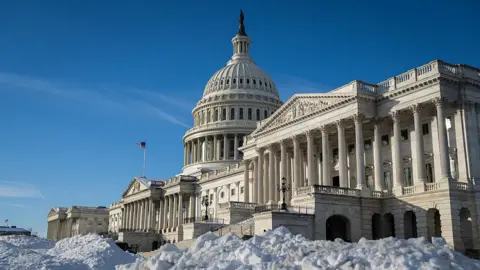
The US federal government has partially shutdown despite a last-ditch funding deal approved by the Senate. The funding lapse began at midnight US eastern time (05:00 GMT) on Saturday, hours after senators agreed to fund most agencies until September. The bill includes just two weeks' funding for the Department of Homeland Security, which oversees immigration enforcement, instead of shutting it down entirely. The bill has yet to be approved by the House of Representatives, which is out of session.
US President Donald Trump struck the deal with Democrats after they refused to give more funding for immigration enforcement following the fatal shooting of two US citizens in Minneapolis by federal agents. This shutdown is the second such government closure in the past year and comes just 11 weeks after the end of the previous funding impasse, which lasted 43 days and was the longest in US history, adversely affecting essential government services including air travel.
This latest shutdown, however, is not expected to be as lengthy or disruptive since the House of Representatives is scheduled to resume sessions on Monday. Meanwhile, the White House has directed various agencies, including transportation, education, and defense, to prepare shutdown plans. A memo issued stated that employees should report for their next regular work shift to undertake orderly shutdown activities.
Lawmakers plan to utilize the two weeks of continued funding for the Department of Homeland Security to negotiate a more comprehensive deal, focusing notably on new policies concerning immigration enforcement agents, amidst calls from Senate Minority Leader Chuck Schumer to implement tighter oversight amid rising concerns over federal agent tactics following recent fatal incidents.
US President Donald Trump struck the deal with Democrats after they refused to give more funding for immigration enforcement following the fatal shooting of two US citizens in Minneapolis by federal agents. This shutdown is the second such government closure in the past year and comes just 11 weeks after the end of the previous funding impasse, which lasted 43 days and was the longest in US history, adversely affecting essential government services including air travel.
This latest shutdown, however, is not expected to be as lengthy or disruptive since the House of Representatives is scheduled to resume sessions on Monday. Meanwhile, the White House has directed various agencies, including transportation, education, and defense, to prepare shutdown plans. A memo issued stated that employees should report for their next regular work shift to undertake orderly shutdown activities.
Lawmakers plan to utilize the two weeks of continued funding for the Department of Homeland Security to negotiate a more comprehensive deal, focusing notably on new policies concerning immigration enforcement agents, amidst calls from Senate Minority Leader Chuck Schumer to implement tighter oversight amid rising concerns over federal agent tactics following recent fatal incidents.