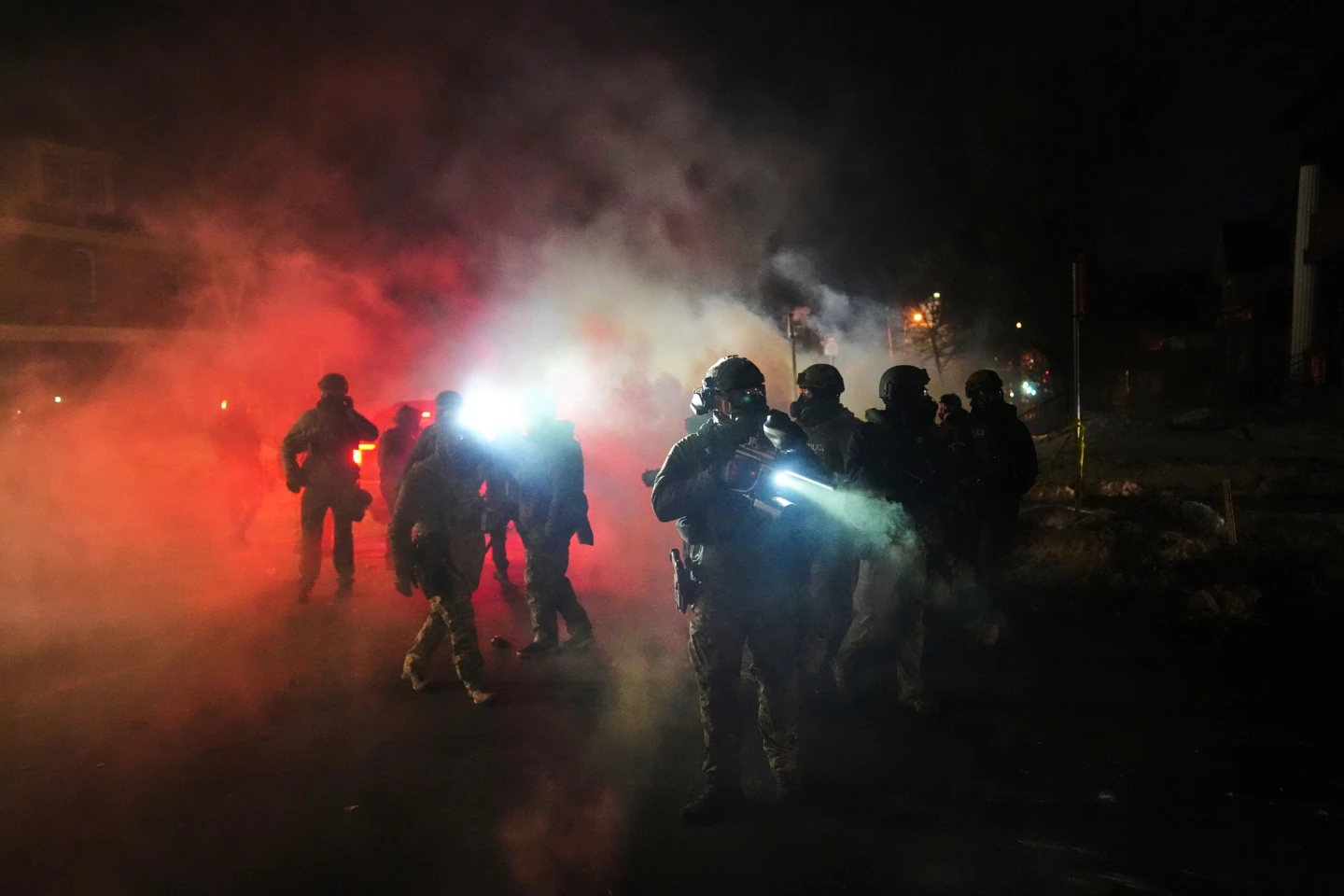
A federal judge on Saturday denied a state government request to block the Trump administration's deployment of thousands of federal immigration agents in Minneapolis, Minnesota. In a ruling, District Court Judge Katherine Menendez stated that the immigration enforcement operation has had, and will likely continue to have, profound and even heartbreaking, consequences on the State of Minnesota. However, she noted that state officials had not sufficiently demonstrated that the surge of US Immigration and Customs Enforcement (ICE) agents in Minneapolis was unlawful.
The ruling arrives amidst widespread protests across the country responding to the fatal shootings of two US citizens by federal agents. Demonstrators are expected to gather in Minneapolis, with further protests having occurred in cities like New York, Los Angeles, and Chicago. The recent deaths of Renee Good and Alex Pretti have highlighted growing discontent and led to questions about the methods employed by ICE in these operations.
Following her ruling, Judge Menendez remarked on evidence indicating “ICE and CBP agents have engaged in racial profiling, excessive use of force, and other harmful actions. However, she emphasized that state officials did not provide a clear metric to assess when lawful law enforcement transitions into unlawful commandeering.
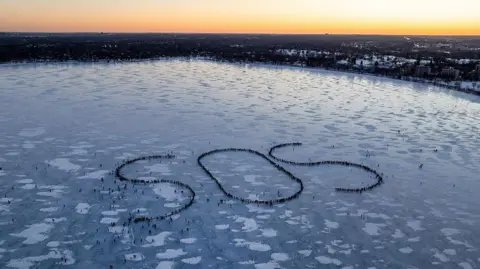
The protests, dubbed 'National Shutdown,' call for no work or school on January 30, 2026, aimed at pressuring the federal government to cease funding ICE. In Minneapolis, demonstrators formed the letters SOS on a frozen lake, indicating a plea for help against ICE's operations. Prior to the protests, the Justice Department launched a civil rights investigation into Pretti's death, while federal officials maintain that their focus remains on apprehending the “worst of the worst criminal illegal aliens.
Minnesota Governor Tim Walz and Minneapolis Mayor Jacob Frey have publicly requested the withdrawal of federal agents. As the situation evolves, tensions between state and federal authorities continue to rise over the enforcement strategies of ICE in the region.
The ruling arrives amidst widespread protests across the country responding to the fatal shootings of two US citizens by federal agents. Demonstrators are expected to gather in Minneapolis, with further protests having occurred in cities like New York, Los Angeles, and Chicago. The recent deaths of Renee Good and Alex Pretti have highlighted growing discontent and led to questions about the methods employed by ICE in these operations.
Following her ruling, Judge Menendez remarked on evidence indicating “ICE and CBP agents have engaged in racial profiling, excessive use of force, and other harmful actions. However, she emphasized that state officials did not provide a clear metric to assess when lawful law enforcement transitions into unlawful commandeering.
The protests, dubbed 'National Shutdown,' call for no work or school on January 30, 2026, aimed at pressuring the federal government to cease funding ICE. In Minneapolis, demonstrators formed the letters SOS on a frozen lake, indicating a plea for help against ICE's operations. Prior to the protests, the Justice Department launched a civil rights investigation into Pretti's death, while federal officials maintain that their focus remains on apprehending the “worst of the worst criminal illegal aliens.
Minnesota Governor Tim Walz and Minneapolis Mayor Jacob Frey have publicly requested the withdrawal of federal agents. As the situation evolves, tensions between state and federal authorities continue to rise over the enforcement strategies of ICE in the region.