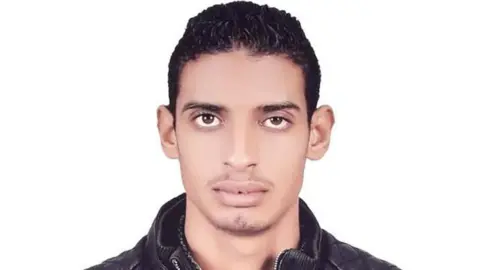
In a significant decision, the Department of Homeland Security (DHS) has withdrawn its plan to deport Guan Heng, a Chinese national who illegally entered the U.S. and is known for his courageous exposure of human rights violations in China's Xinjiang region. Recently, rights activists raised alarms that Guan could face severe consequences upon return to China due to his activism.
Guan, 38, gained global attention after secretly filming detention facilities in Xinjiang, where it is reported that up to 1 million ethnic minorities, particularly Uyghurs, are detained. His activities directly challenged the Chinese government's narrative maintaining that these facilities are merely vocational training centers aimed at combating extremism.
Activist Rayhan Asat, a human rights lawyer involved in Guan's case, confirmed that DHS informed Guan's legal team about its decision to cancel the deportation request to Uganda. She expressed optimism that his asylum case would now proceed favorably.
Zhou Fengsuo, executive director of Human Rights in China, echoed this sentiment, stating, “We’re really happy” about the U.S. administration's choice. Guan is currently detained in an ICE facility in New York, and his legal team is working to secure his release on bond.
Guan's perilous journey to the U.S. began in 2021 after he was forced to leave China for safety. Following a series of travels across various countries, he reached Florida after a 23-hour journey at sea. The footage he released on YouTube from the detention centers provided critical evidence of the abuses occurring in Xinjiang, drawing public and political support.
In response to his plight, lawmakers have advocated for Guan's asylum, asserting that the U.S. has a moral duty to protect victims of human rights abuses and those who expose them, calling his protection a crucial matter of human dignity and justice.
Guan, 38, gained global attention after secretly filming detention facilities in Xinjiang, where it is reported that up to 1 million ethnic minorities, particularly Uyghurs, are detained. His activities directly challenged the Chinese government's narrative maintaining that these facilities are merely vocational training centers aimed at combating extremism.
Activist Rayhan Asat, a human rights lawyer involved in Guan's case, confirmed that DHS informed Guan's legal team about its decision to cancel the deportation request to Uganda. She expressed optimism that his asylum case would now proceed favorably.
Zhou Fengsuo, executive director of Human Rights in China, echoed this sentiment, stating, “We’re really happy” about the U.S. administration's choice. Guan is currently detained in an ICE facility in New York, and his legal team is working to secure his release on bond.
Guan's perilous journey to the U.S. began in 2021 after he was forced to leave China for safety. Following a series of travels across various countries, he reached Florida after a 23-hour journey at sea. The footage he released on YouTube from the detention centers provided critical evidence of the abuses occurring in Xinjiang, drawing public and political support.
In response to his plight, lawmakers have advocated for Guan's asylum, asserting that the U.S. has a moral duty to protect victims of human rights abuses and those who expose them, calling his protection a crucial matter of human dignity and justice.