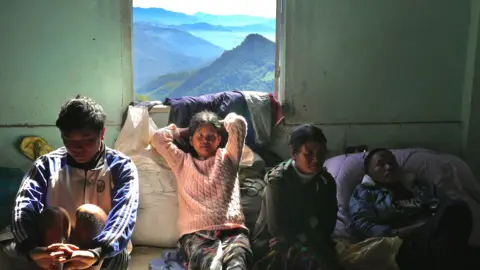
Late one night last month, Iang Za Kim heard explosions in a neighbouring village, then fighter jets flying overhead. She ran out of her home to see smoke rising from a distance.
We were terrified. We thought the junta's planes would bomb us too. So we grabbed what we could – some food and clothes and ran into the jungles surrounding our village.
Iang's face quivers as she recounts the attack on November 26 in K-Haimual, her village in Myanmar's western Chin State, and then she breaks down.
She is among thousands of civilians who have fled their homes as the Burmese military initiated a fierce campaign of air strikes and ground offensives in rebel-held areas to reclaim territory ahead of elections set for December 28.
Four other women sitting around her also start crying, showing the trauma they have suffered. While the air strikes forced Iang to flee, she also fears being coerced into participating in the elections.
If we are caught and refuse to vote, they will put us in jail and torture us. We've run away so that we don't have to vote, she states.
Those from Chin State have condemned the junta's latest offensive as one of the fiercest in three years, with many seeking refuge in different parts of the state or fleeing across the border into India's Mizoram state.
Indian villagers have provided food and supplies to the refugees. However, the fears of persecution remain, as Ral Uk Thang, an 80-year-old, describes harrowing experiences of arrests and torture at the hands of the military.
The military regime has garnered international condemnation for targeting civilian infrastructure, including hospitals and schools, during its offensives. Reports indicate that many schools received direct hits, resulting in deaths and injuries.
As preparations for the election continue amidst these tensions, many citizens express distrust, perceiving the upcoming vote as a sham. The National League for Democracy party, led by Aung San Suu Kyi, will not participate, as many of its leaders remain imprisoned.
In interviews, civilians have criticized the electoral process, asserting that the military's grip on power prevails and that their hopes for democracy are continually crushed.
The military does not know how to govern our country. They only work for the benefit of their high-ranking leaders, expressed Ral Uk Thang, echoing sentiments of despair shared by many in the community.
As the situation escalates, more civilians flee, demonstrating the critical need for international attention to their plight and the political realities facing Myanmar.