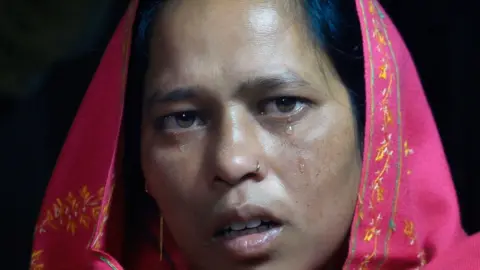
I was scared that my child's nationality would change if he was born in Bangladesh, says a heavily pregnant Sunali Khatun, 25, who returned to India earlier this month after being deported to the neighbouring country in June.
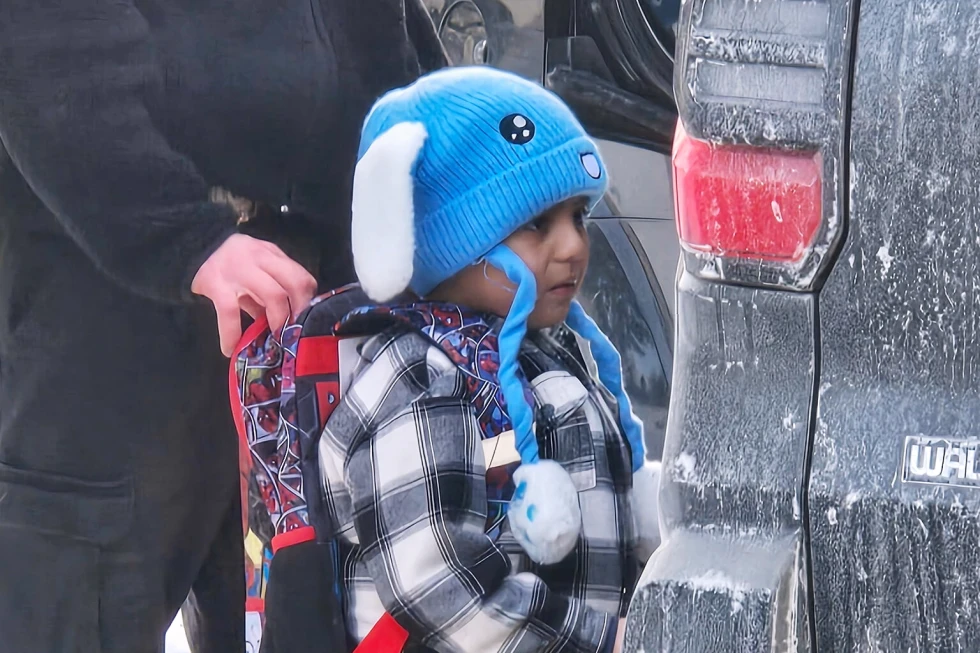
Ms Khatun, a domestic worker from India's eastern state of West Bengal, was detained in Delhi with her husband, Danish Sheikh, and their eight-year-old son, and deported to Bangladesh on suspicion of being illegal immigrants. Bangladeshi authorities later jailed the family for entering the country unlawfully.
Her deportation made national headlines and was stridently criticised by the West Bengal government, which accused the Bharatiya Janata Party-led federal government of deporting her without cause. She is among hundreds who have been detained and deported to Bangladesh in recent months.
Although Delhi has not provided official data about these deportations, sources in the Bangladesh government previously informed the BBC that over 1,200 people were illegally pushed in in May alone. Reports also indicated that 700 people were sent back from Delhi during the same period.
Crackdowns on alleged Bangladeshi immigrants are not new in India, where both countries share cultural ties and a porous 4,096 km (2,545-mile) border. West Bengal has experienced waves of migration for work or refuge from religious persecution.
However, rights activists argue that recent deportations target Bengali-speaking Muslims and are being executed without due process.
Ms Khatun and her family were deported after Delhi's Foreign Regional Registration Office claimed they lacked proper documentation. Her seven-year-old daughter was left behind with relatives at the time of detention.
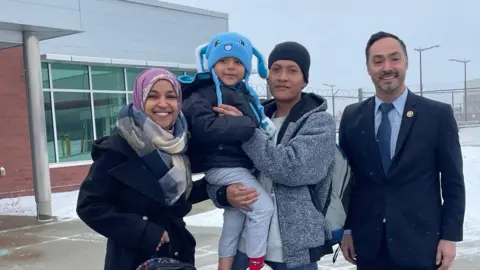
Under protocol, authorities are required to verify a suspected illegal migrant's claim with their home state, but she claims this was not followed in her case. In December, India's Supreme Court ordered the federal government to allow Ms Khatun and her son to return on humanitarian grounds while her citizenship was investigated. She has since been living with her parents in West Bengal, while her husband remains in Bangladesh.
Her emotional pleas reflect the fear and uncertainty many face in such deportation situations. We are not from Bangladesh, we are Indian. Why did they do this to us? she asks as she navigates the challenges of raising a family amid a deeply fragmented life caused by government policies. As her situation continues to evolve, Ms Khatun remains determined that her family will withstand this upheaval, even as they struggle to make ends meet.
Ms Khatun, a domestic worker from India's eastern state of West Bengal, was detained in Delhi with her husband, Danish Sheikh, and their eight-year-old son, and deported to Bangladesh on suspicion of being illegal immigrants. Bangladeshi authorities later jailed the family for entering the country unlawfully.
Her deportation made national headlines and was stridently criticised by the West Bengal government, which accused the Bharatiya Janata Party-led federal government of deporting her without cause. She is among hundreds who have been detained and deported to Bangladesh in recent months.
Although Delhi has not provided official data about these deportations, sources in the Bangladesh government previously informed the BBC that over 1,200 people were illegally pushed in in May alone. Reports also indicated that 700 people were sent back from Delhi during the same period.
Crackdowns on alleged Bangladeshi immigrants are not new in India, where both countries share cultural ties and a porous 4,096 km (2,545-mile) border. West Bengal has experienced waves of migration for work or refuge from religious persecution.
However, rights activists argue that recent deportations target Bengali-speaking Muslims and are being executed without due process.
Ms Khatun and her family were deported after Delhi's Foreign Regional Registration Office claimed they lacked proper documentation. Her seven-year-old daughter was left behind with relatives at the time of detention.
Under protocol, authorities are required to verify a suspected illegal migrant's claim with their home state, but she claims this was not followed in her case. In December, India's Supreme Court ordered the federal government to allow Ms Khatun and her son to return on humanitarian grounds while her citizenship was investigated. She has since been living with her parents in West Bengal, while her husband remains in Bangladesh.
Her emotional pleas reflect the fear and uncertainty many face in such deportation situations. We are not from Bangladesh, we are Indian. Why did they do this to us? she asks as she navigates the challenges of raising a family amid a deeply fragmented life caused by government policies. As her situation continues to evolve, Ms Khatun remains determined that her family will withstand this upheaval, even as they struggle to make ends meet.