In brief
As tensions escalate between the US and Iran, Kharg Island, a vital hub for Iran's oil exports, is at the center of discourse regarding military action. With 90% of Iran's oil passing through this island, potential US attempts to seize control could have serious geopolitical ramifications. The resilience of Iranian forces and the complexity of executing an operation in such a sensitive area complicate the situation further.
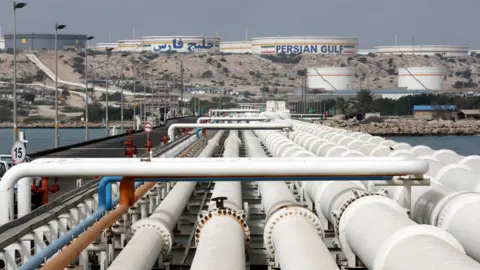
US President Donald Trump has indicated that he may send troops to seize control of Iran's key oil export terminal at Kharg Island in the northern Gulf. Kharg Island has long been Iran's chief outlet for its oil exports, sitting offshore with sufficient depth to load Very Large Crude Carriers (VLCCs), which can hold around two million barrels; approximately 90% of Iran's oil exports pass through this terminal.Historically, Kharg Island has been a target during conflicts, notably bombed during the Iran-Iraq war. Most recently, on March 13, the US targeted military assets on the island but spared crucial oil infrastructure, indicating its significant strategic value.Should the US decide to invade Kharg Island, it would likely be a temporary operation aimed at weakening Iran's oil exports as leverage to compel Iran to ease its control over the crucial Strait of Hormuz. However, Iran's Speaker of Parliament has warned of severe retaliation against any invading forces, suggesting that Iranian defenses have been fortified.The deployment of nearly 5,000 US Marines and paratroopers to the region has led to speculation that they could execute a land grab on Kharg Island. In theory, the paratroopers might conduct a night aerial assault to secure strategic locations on the island, while US Marines could launch amphibious operations from naval vessels, navigating the perilous Strait of Hormuz amidst Iranian defenses.Both air and sea invasions would face heavy resistance, including anti-personnel mines and drone swarms. While US Marines are equipped to manage such combat, it’s feared that operations could lead to significant casualties.Maintaining a foothold would be another challenge, as forces would be subjected to ongoing bombardments from Iran, drawing parallels to Russia's experience with Ukraine’s Snake Island after its invasion in 2022.The prospect of a prolonged US presence in Iran is likely unpopular domestically, especially among Trump supporters who favor non-involvement in foreign conflicts. Amidst military posturing, Trump has also suggested peace discussions with Iran, hinting at a potential strategic deception behind his military threats.Finally, beyond Kharg, other islands in the Gulf, such as Larak and Qeshm, hold strategic importance and could also be targeted by the US, given their geographical advantages and Iranian military assets.As the international community watches closely, the situation remains fluid, with potential for both conflict and diplomacy, underscoring the volatile landscape of US-Iran relations.