In brief
Amidst a backdrop of heightened tensions, President Trump has extended the ceasefire with Iran to allow for negotiations aimed at crafting a unified peace proposal. This decision comes after a chaotic day of diplomacy interrupted by postponements of peace talks and uncertainty regarding Iran's participation. Trump's actions signal a strategic pause in military escalation as he navigates internal and external pressures.
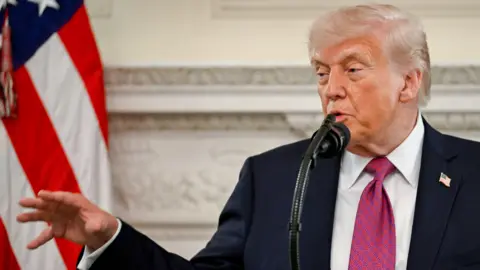
Tuesday began as a frantic day of diplomacy in Washington, with Air Force Two ready to fly Vice President JD Vance to Islamabad for another round of peace talks between the US and Iran. Several hours later, Air Force Two hadn't taken off, and the negotiations were postponed. President Donald Trump announced that he would extend the ceasefire with Iran, set to expire on Wednesday evening, to allow the regime more time to create a 'unified proposal' to end the war. In between, Trump weighed his options as the world waited to see if the countries were any closer to ending the war. Trump's decision marked the second time in as many weeks that he has backed off a threat to escalate the war, buying himself more time to wind down a conflict as it approaches the two-month mark. Vance never officially announced the Islamabad trip, leaving Washington guessing. And Iran never officially committed to attending the talks, leaving the White House in a difficult position of deciding whether to send Vance without assurance that Tehran would even come to the table. As the day wore on, signs of a postponement emerged. Special envoy Steve Witkoff and Trump's son-in-law Jared Kushner, senior members of the US negotiating team led by Vance, flew to Washington from Miami instead of heading straight to Islamabad. Soon after, Vance made his way to the White House for 'policy meetings' as the president and his senior advisers debated what to do next. In the end, Trump announced the ceasefire extension on Truth Social, his preferred means for war updates since it began in late February. The president said he made the decision at the request of Pakistan, which has mediated talks between Tehran and Washington. Trump stated, 'We have been asked to hold our Attack on the Country of Iran until such time as their leaders and representatives can come up with a unified proposal.' Notably, Trump this time did not specify how long the ceasefire might last. His previous announcements set firm deadlines, leading many to speculate about the implications of this more ambiguous extension. James Jeffrey, a former US ambassador to Iraq and Turkey, noted that there is 'no clear formula for ending wars,' but highlighted that Trump's latest approach appears to balance threats and diplomacy. Experts agree that while this extension allows time for negotiations, significant challenges remain to achieving a lasting peace. With tensions still high, major questions linger about Iran's nuclear program and regional influence as negotiations continue. While Trump has bought time, the resolution to this conflict remains elusive.