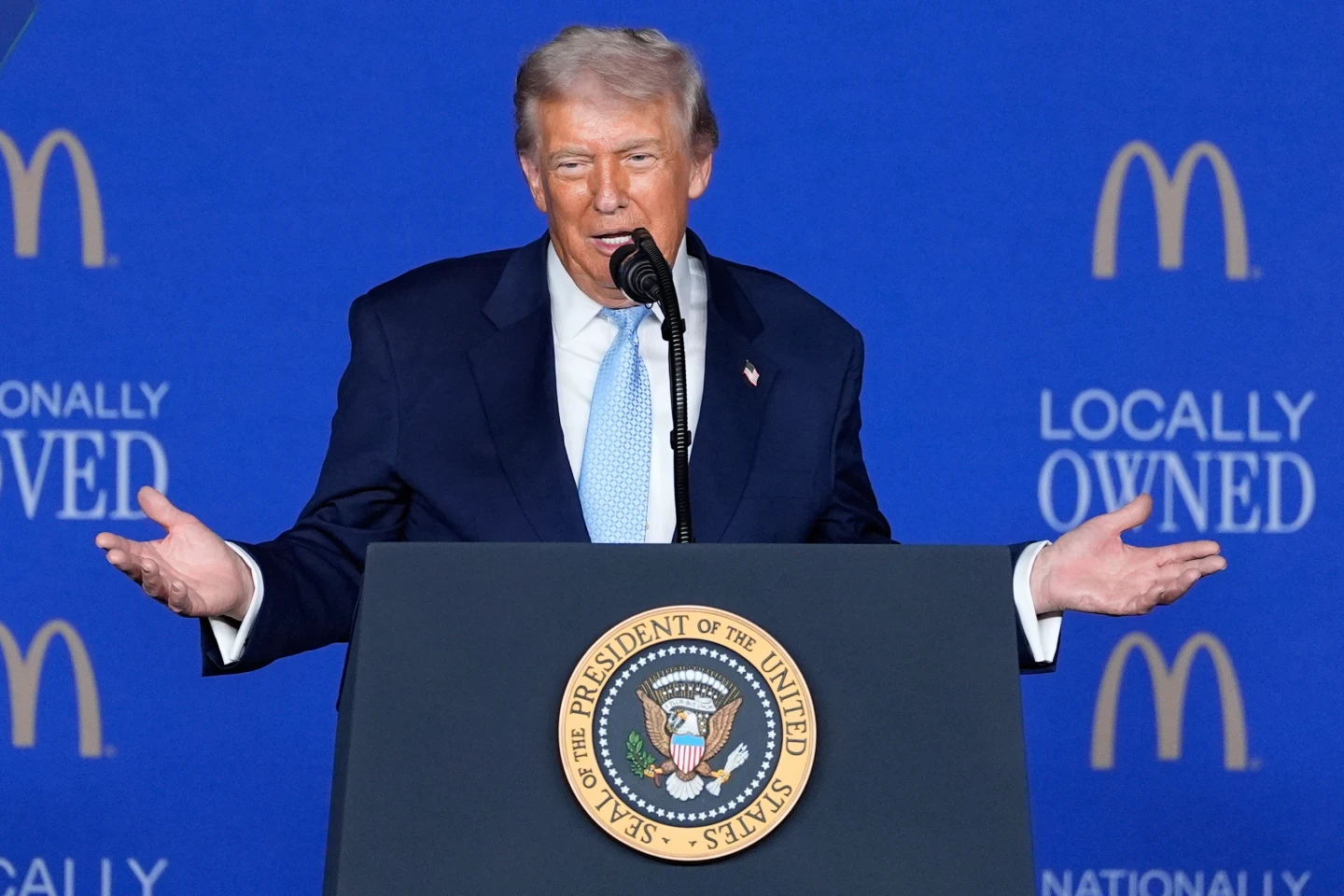
As President Donald Trump laid it out to reporters this summer, the plan was simple.
Trump, alongside Republican officials, believed they were entitled to more conservative-leaning congressional seats by redrawing the electoral maps, a maneuver aimed to strengthen their hold in Texas and other Republican strongholds before the midterm elections. Breaking a long-standing political tradition, Trump sought mid-decade redistricting amid fears of losing congressional control.
However, four months later, his strategy is proving to be intricate and potentially counterproductive. Following a recent federal court ruling that struck down the revised Texas congressional map, Democrats now stand to gain more winnable seats in the House.
UCLA law professor Rick Hasen remarked, “Trump may have let the genie out of the bottle, but he may not get the wish he’d hoped for.”
Traditionally, the president's party often loses seats in midterm elections. Trump's involvement in redistricting appears to symbolize the limitations of presidential influence over such political maneuvers.
Playing with fire
In an attempt to maintain Republican dominance in Washington, Trump's reliance on a decentralized and complex political process has raised eyebrows. Redrawing electoral boundaries is an intricate task fraught with legal nuances, where local legislators often prioritize self-preservation over partisan gain. The danger lies in a scenario where aggressive gerrymandering by one party prompts retaliatory adjustments by the other.
A recent instance in California illustrates this phenomenon. Activists pushed to replace a nonpartisan map with a Democrat-drawn one, aiming to capture five congressional seats that could offset any Republican gains in Texas. If the Democratic map is upheld, the newfound advantage could nullify Republican efforts, as observed by California's Governor Gavin Newsom.
A mix of victories and setbacks for Trump
While there’s no assurance that the Texas ruling is final, as appeals to the Supreme Court are expected, it marks a blow to Trump's redistricting strategy. The current legal landscape is not favorable for Republicans in many states. North Carolina and Missouri managed to redraw their maps in Trump’s favor, although challenges remain. Meanwhile, attempts by Kansas and Indiana legislators to alter district maps have met with pushback.
Unintended consequences of gerrymandering
Trump's audacious push could result in unintended harm to Republican interests. Lawmakers are often resistant to substantial changes in their districts, fearing that a “dummymander” could dilute their voter base and jeopardize their seats, particularly in upcoming electoral contests. Meanwhile, Democrats in states like Illinois are opting for restraint despite opportunities for redistricting.
“They would be crazy to go along with this,” said Jonathan Cervas, an expert in redistricting, highlighting the unpredictable nature of Trump's initiative.