Trump’s Covert Plane Switch Highlights Military Aviation’s Carbon Footprint
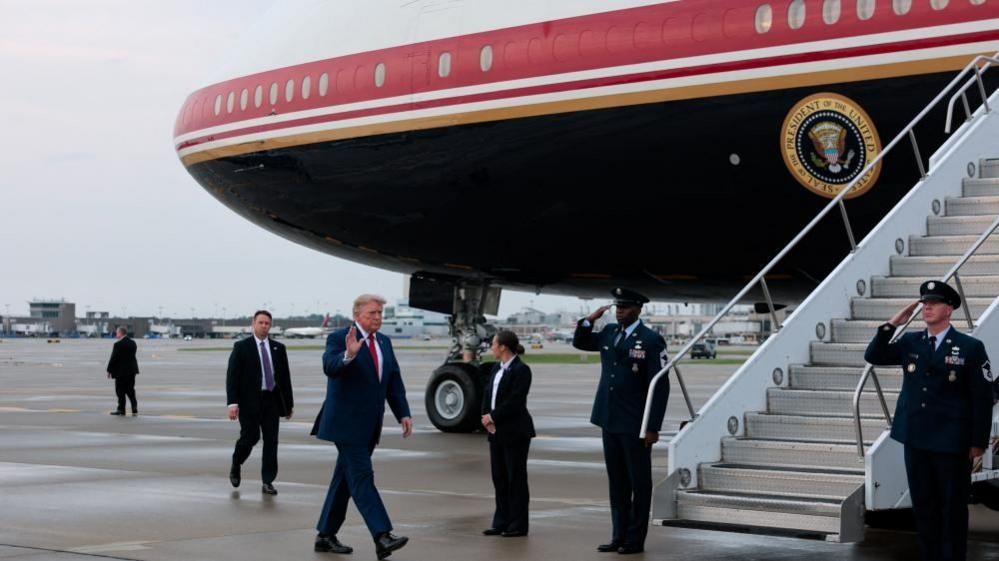
President Donald Trump has confirmed that he secretly swapped planes after a NATO summit in Turkey last month due to a possible threat. The announcement, made on Tuesday, came after footage of him boarding the old Air Force One at Ankara airport, only to be promptly moved onto a smaller C‑32A aircraft. The switch was reportedly orchestrated with a catering truck that was elevated to the same level as the back doors of the aircraft, allowing Trump’s escape while journalists and staff were unaware of the change.
According to officials, the U.S. had detected a credible Iranian threat to launch a missile at the presidential jet. Trump’s decision to avoid Air Force One, which the Secret Service deemed riskier, reflects the urgency of national security but also throws light on the large carbon emissions associated with such military flights. A Boeing 747‑8 donated by Qatar, like the old Air Force One, burns several thousand gallons of jet fuel per flight, whereas the smaller C‑32A, a modified 757, is more efficient but still significant in terms of global warming potential.
The incident raises a broader question: how can the U.S. military balance immediate security imperatives with the growing need to decarbonise its transport fleet? Efforts underway to retrofit aircraft with sustainable aviation fuels and to incorporate electric or hybrid power are stalled by the strategic flexibility required in conflict zones. Transparent protocols for covert movements might also reduce unnecessary flights, cutting both cost and emissions.
While the swap was driven by a credible threat, the environmental cost of secretive, high‑intensity air operations remains a concern for policymakers. Addressing both security and sustainability will require a coordinated approach that prioritises safety without compromising climate commitments. In the coming months, the U.S. military’s aviation strategy will likely be scrutinised to ensure that costly, high‑risk missions do not unduly impede progress toward decarbonised defence.