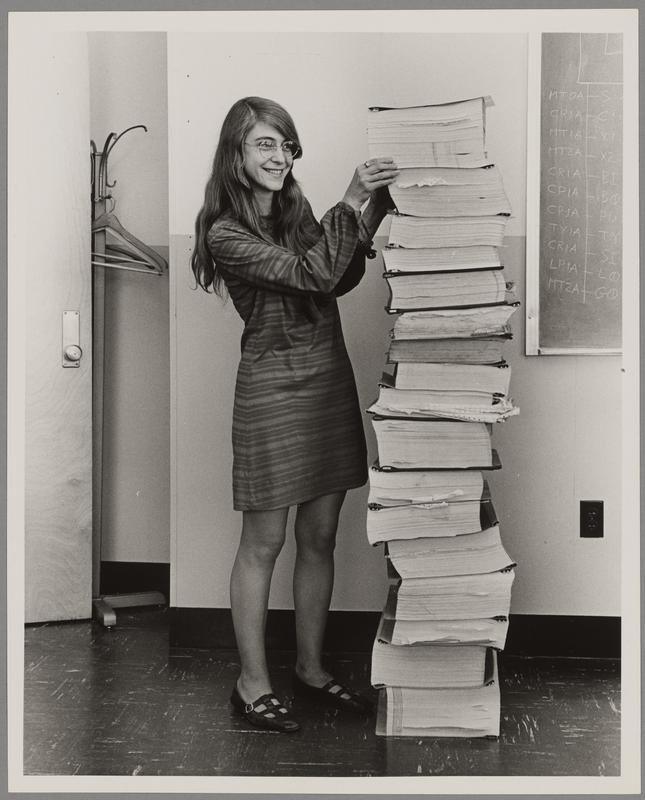
Margaret Hamilton, the mathematician and software pioneer, led the team that wrote the onboard software enabling Apollo 11’s historic lunar landing. Without her careful design, the spacecraft’s limited computer could have failed during the crucial descent.
Hamilton joined MIT in 1959 and managed the Software Engineering Division until the mid‑1970s. She was the first programmer – and first woman hired – in a field that was still unrecognised. Her leadership produced the first ever formal discipline of software engineering.
During the 1969 launch, the Apollo guidance computer threw an alarm when its memory load threatened to exceed capacity. Hamilton’s team had anticipated such a scenario, programming a “priority‑driven” system that re‑prioritised tasks to keep the manoeuvre critical for landing. That failure‑tolerant logic proved essential for the mission’s safe completion.
The methods Hamilton pioneered are still employed by today’s large‑scale, real‑time systems – from aircraft control to global climate models that predict the planet’s future. Her legacy demonstrates how rigorous engineering can safeguard humanity’s most fragile and ambitious endeavours.

In 2016 President Barack Obama awarded Hamilton the Presidential Medal of Freedom for her contribution to science and space travel. He praised her as a symbol of the unsung women who helped push humanity into the cosmos.
Born in Indiana in 1936, Hamilton earned a BA in mathematics from Earlham College before moving to Massachusetts, where she first worked at MIT to support her husband’s legal studies. Later she founded Hamilton Technologies and other software firms, bringing her expertise to the private sector.
Her death on 30 September at the age of 90 has sent condolences from MIT, Earlham College, and governmental bodies, underscoring the profound impact of her career on science, engineering, and the empowerment of women in STEM.