In brief
NASA's Artemis II mission successfully circled the Moon, reviving public interest in space exploration. While the mission's success is celebrated, the agency now faces significant challenges, including delays in developing lunar landers, complex engineering requirements for in-orbit fueling, and the ambitious timeline for establishing a Moon base. Looking ahead, the geopolitical landscape is shifting with China's competitive ambitions in space, raising questions about the feasibility of future crewed missions to Mars as well.
Nasa's Artemis II mission has successfully sent four astronauts sweeping around the far side of the Moon and landed them safely back home.
The Orion spacecraft performed admirably and the images the astronauts captured have delighted a whole new generation about the possibilities of space travel.
But does this mean that the children enthralled by the mission will be able to live and work on the Moon in their lifetimes? Perhaps even go to Mars, as the Artemis programme promises?
It seems churlish to say, but looping the Moon was relatively easy. The really hard part lies ahead, so the answer is maybe, maybe not.
The lander problem
To get boots on the lunar surface, Nasa needs a lander. The US space agency has contracted two private companies to build them: Elon Musk's SpaceX and Jeff Bezos's Blue Origin.
Both are well behind schedule and delays are worrying. Nasa's own Office of Inspector General reported that SpaceX's lunar Starship is two years behind its original deliverable.
These new landers will require enormous amounts of infrastructure, which is a challenge that includes maintaining stable propellant supplies in orbit and performing complex engineering tasks.
The new space race
Nasa has kept its 2028 target for a first Artemis Moon landing partly for political reasons. The target is ambitious and Congress continues to fund it. However, with China's rapid progress in space exploration, the U.S. faces stiff competition.
Mars - the distant dream
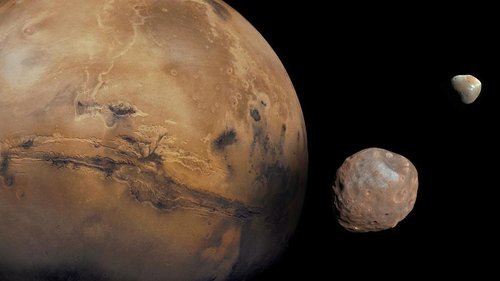
Looking beyond the Moon, many experts agree that human exploration of Mars is still a long way off. The engineering challenges will be more complex than those faced during Artemis and overcoming them will require significant time and resources.
Despite the challenges, the Artemis programme has rejuvenated interest in human spaceflight. As the conversation continues regarding how to effectively navigate the future of lunar and Martian exploration, the long-term vision remains crucial.