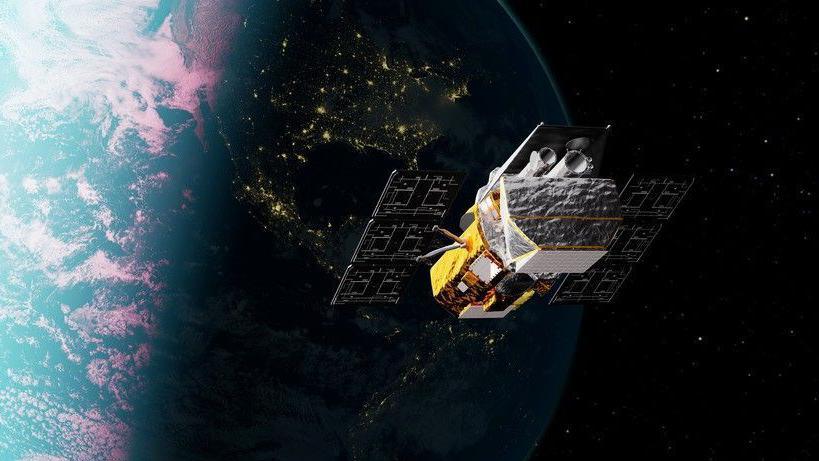
NASA rushed to deploy a cutting‑edge rescue craft – the three‑armed LINK spacecraft – to intercept the swift‐moving Swift observatory, which is at risk of re‑entering Earth’s atmosphere in the coming months.
Swift, launched in 2004, scans the sky for gamma‑ray bursts, the most energetic explosions in the cosmos. The data it collects is vital for studying high‑energy radiation that can alter Earth’s upper atmosphere and influence climate processes.
Solar activity has expanded Earth’s thin upper atmosphere, increasing aerodynamic drag on satellites. Swift’s orbit fell from 373 miles to just 220 miles in two years, threatening loss of a key climate‑related science instrument.
Katalyst Space Technologies, a startup out of Flagstaff, Arizona, engineered the rescue mission in less than a year. Their robot, powered by eight months of rapid design, fabrication and testing, will approach Swift, use robotic arms to secure a hold, and lift it to a safer orbit.
Once attached, LINK will fire tiny thrusters, gradually raising Swift’s altitude from 360 km to its original 600 km, where it will remain for several more years. The procedure is untested, but a successful lift would protect a uniquely valuable instrument for long‑term climate and astrophysics research.
Beyond Swift, the mission could pave the way for future rescue operations of orbital facilities like the Hubble Space Telescope, giving the world a new template for preserving satellite assets that support environmental monitoring and disaster response.